Herodian Second Palace
Dates
31 BCE - 4 BCE
Garden Description
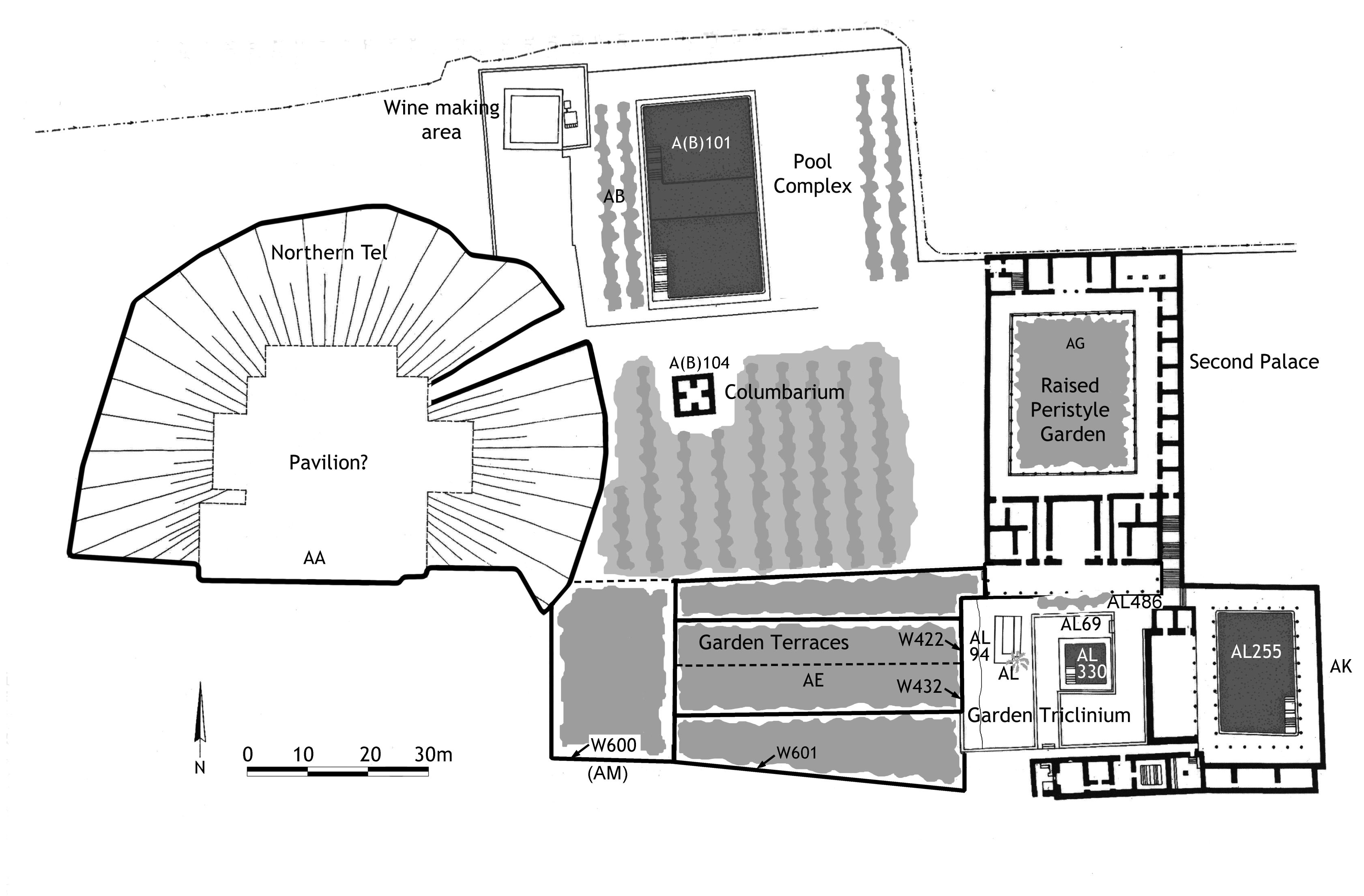
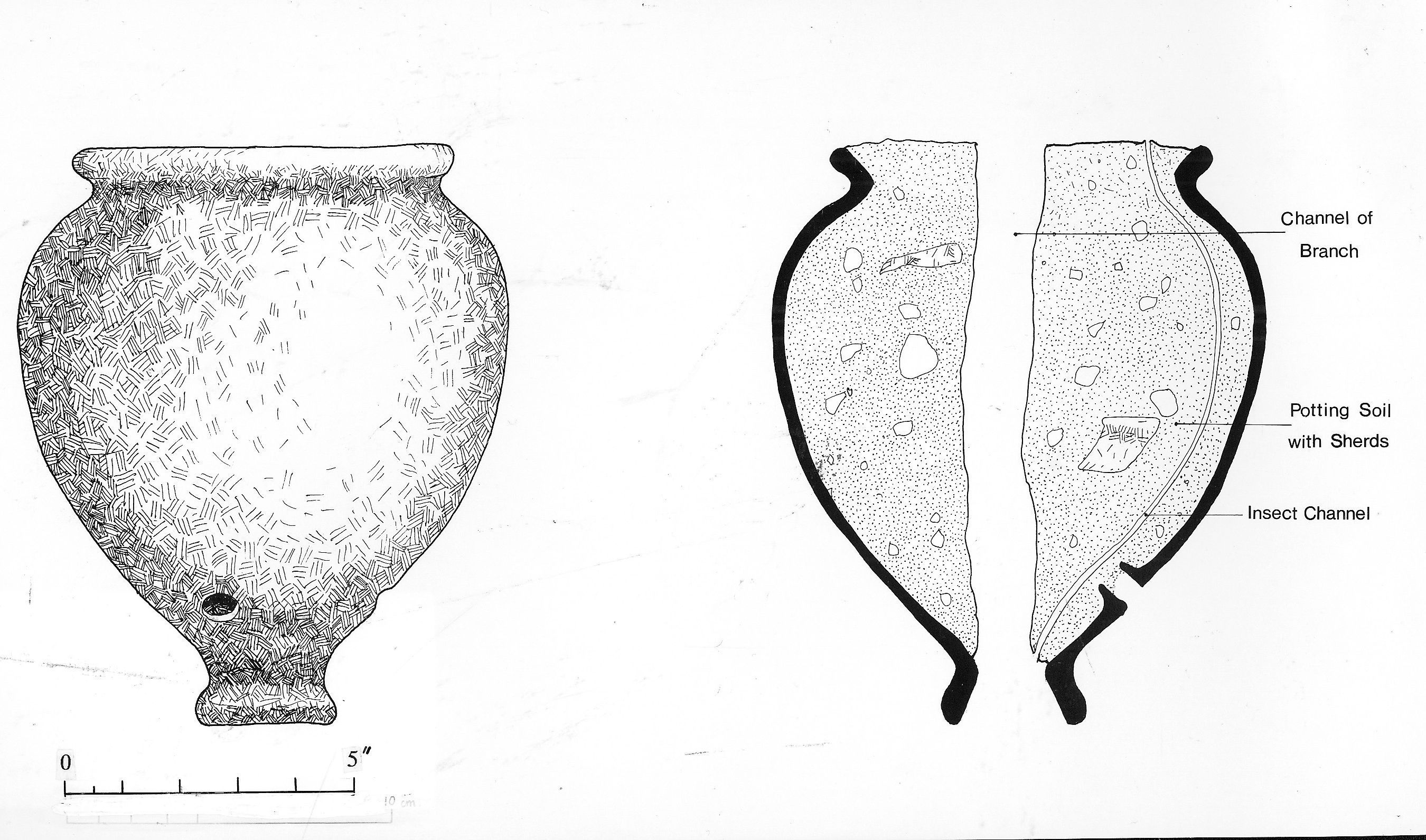
The earthquake of 31 BCE destroyed the Hasmonean palace complex, and the political changes that took place after Actium enabled Herod to gain full possession of the winter palaces. On top of the ruined palaces, he built a new complex (Fig 2). The two pools of the Pool Complex were unified to form a single, large pool (32 x 18m)! Gardens replaced the pavements around the pool, as evidenced by rows of ceramic planting pots found there (Fig. 3). On the western side of the pool (A (B) 2), two rows of planting pots ran parallel to the pool. the distance between each pot was about two and a half meters apart while on the eastern side of the pool (A (B) 3) the pots were spaced about one meter apart. Colonnades were built around the larger of these pools and a hall was built on the western side (F), probably meant for the swimmers. A long, narrow Roman-style bath house was built to the west of this pool.
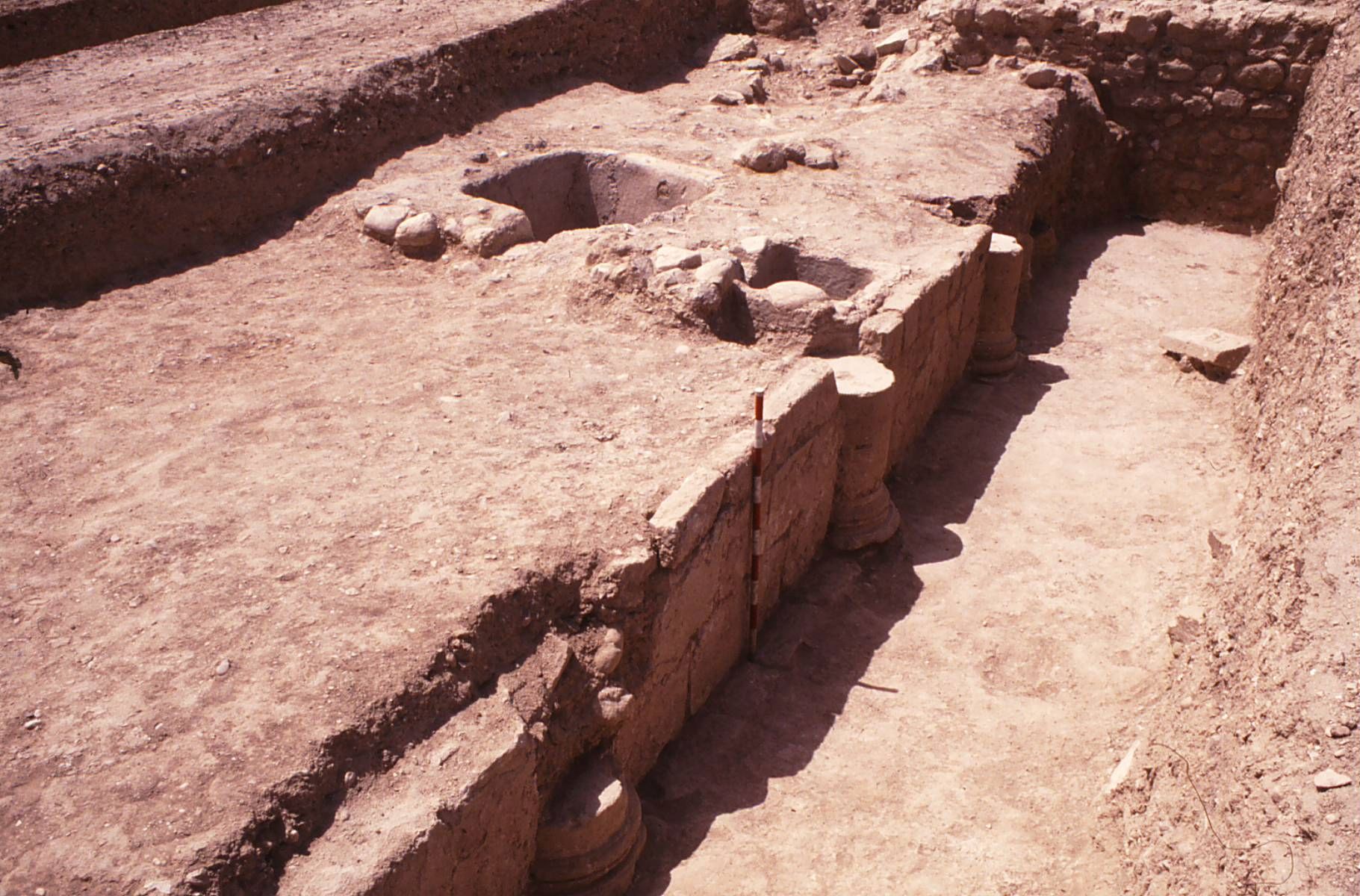
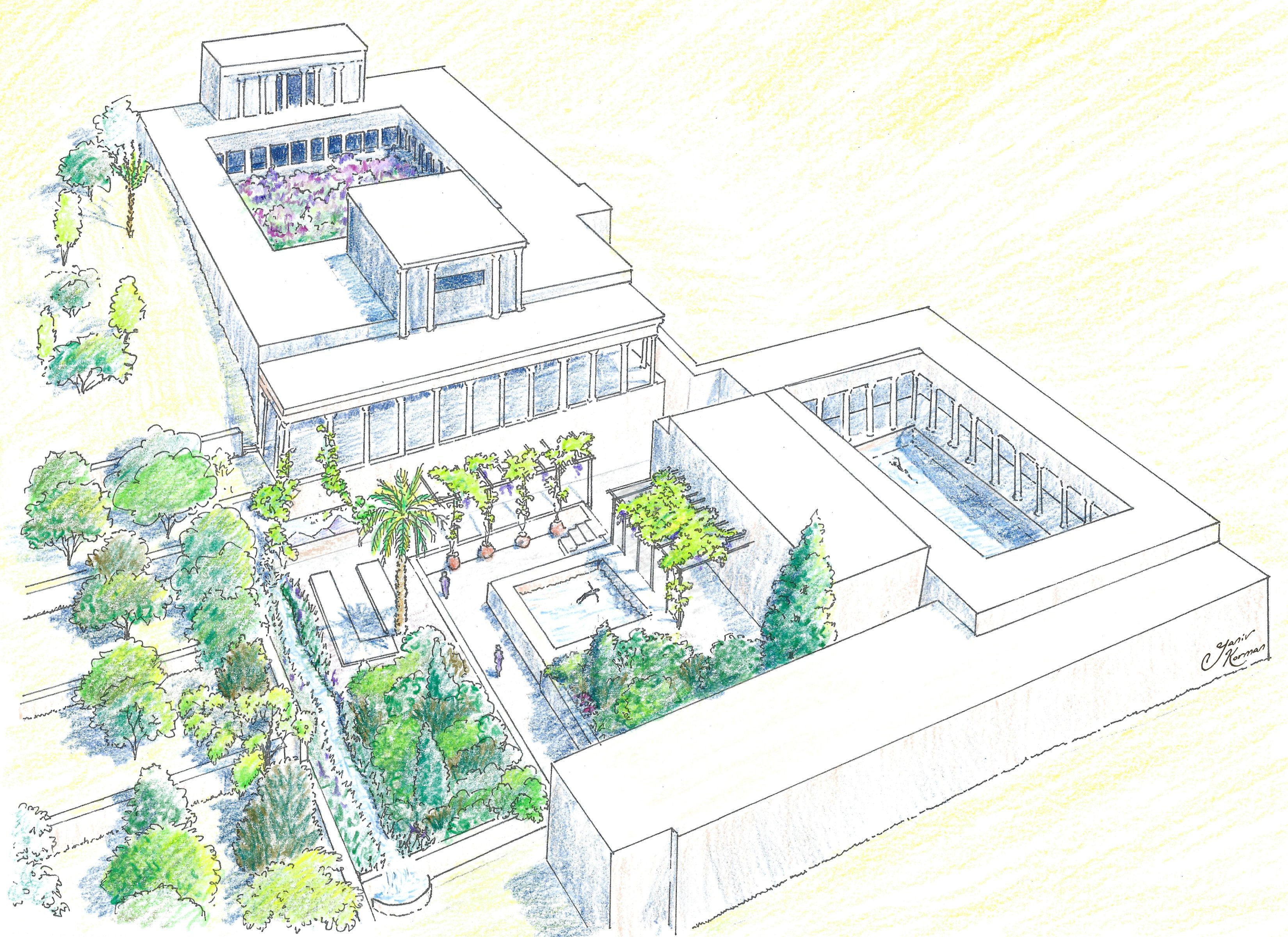
The main unit of the second palace included two wings. The northern wing, was elevated 5 meters above the southern wing and was built around a fairly large peristyle courtyard (34 x 28), flanked by rooms on three sides. The courtyard itself had an unusual structure. Its plan features a regular peristyle but the level of the open courtyard is ca. 1 m. higher than that of the floors of the surrounding colonnades (Fig 4). Anyone walking around the courtyard would have seen, and perhaps even smelled, the flowering shrubs directly in front of them. Adjusted to the raised Peristyle garden was a triclinium, ornamented with wall panels and incorporated a window with a view onto the garden. Southern to the triclinium was a colonnaded balcony that overlooked the lower wing of the palace and a dramatic view of Wadi Qelt. The low wing of the palace (Fig 2, AK) incorporated the two Hasmonean swimming pools (one 20 x 20 m. and 7 x 7 m). Colonnades were built around the larger of the pools and a hall was built on the western side, probably meant for the swimmers (Fig 5). A long, narrow Roman-style bath house was built to the west of this pool.
Plans
Images
Bibliography
- G. Garbrecht, and E. Netzer, "Die Wasserversorgung des geschichtlichen Jericho und seiner koniglichen Anlagen," in Mitteilungen (aus dem Leichtweiss-Institut fur Wasserbau) 115, Braunschweig/Jerusalem 1991 worldcat
- K. Gleason, "Garden Excavations at the Herodian Winter Palace in Jericho, 1985-1987", Bulletin of the Anglo-Israel Archaeological Society, Vol. 7, 1987-8 Jstor
- K. Gleason, "A Garden Excavation in the Oasis Palace of Herod the Great at Jericho," Landscape Journal 12.2 (1993):156-67wordcat
- J. Kelso, James L. and Dimitri Baramki, "Excavations at New Testament Jericho and Kirbet en-Nitla," Annual of the American Schools of Oriental Research 29-30 (1949-51): 38-39
- E. Netzer, The Palaces of the Hasmoneans and Herod the Great, Jerusalem: The Israel Exploration Society, 1999: 13-64 wordcat
- Nielsen, Inge, Hellenistic Palaces,1994, 195-201 wordcat
- E. Netzer, The Hasmonean and Herodian Palaces at Jericho: Final Reports of the 1973-1987 Excavations, Vol. 1, Jerusalem: Israel Exploration Society, 2001 : 287-298 worldcat
- E. Netzer, and Garbrecht G, "Water channels and a royal estate of the late Hellenistic period in Jericho's eastern plains," in D. Amit, J. Patrich and Y.; Hirschfeld, eds, The Aqueducts of Israel. 353-365. JRA Supplement 46, R.I. 2002 worldcat
- J. Pritchard, "The Excavation at Herodian Jericho, 1951," The Annual of the American Schools of Oriental Research 32-3 (1952-4): 56-58. worldcat
Keywords
Places
- Jericho (Pleiades:687917)
- Iudaea (province) (Pleiades:981527)
- Judean Desert (desert) (TGN:8713913)