Masada
Dates
30 BCE - 60 CE
Garden Description
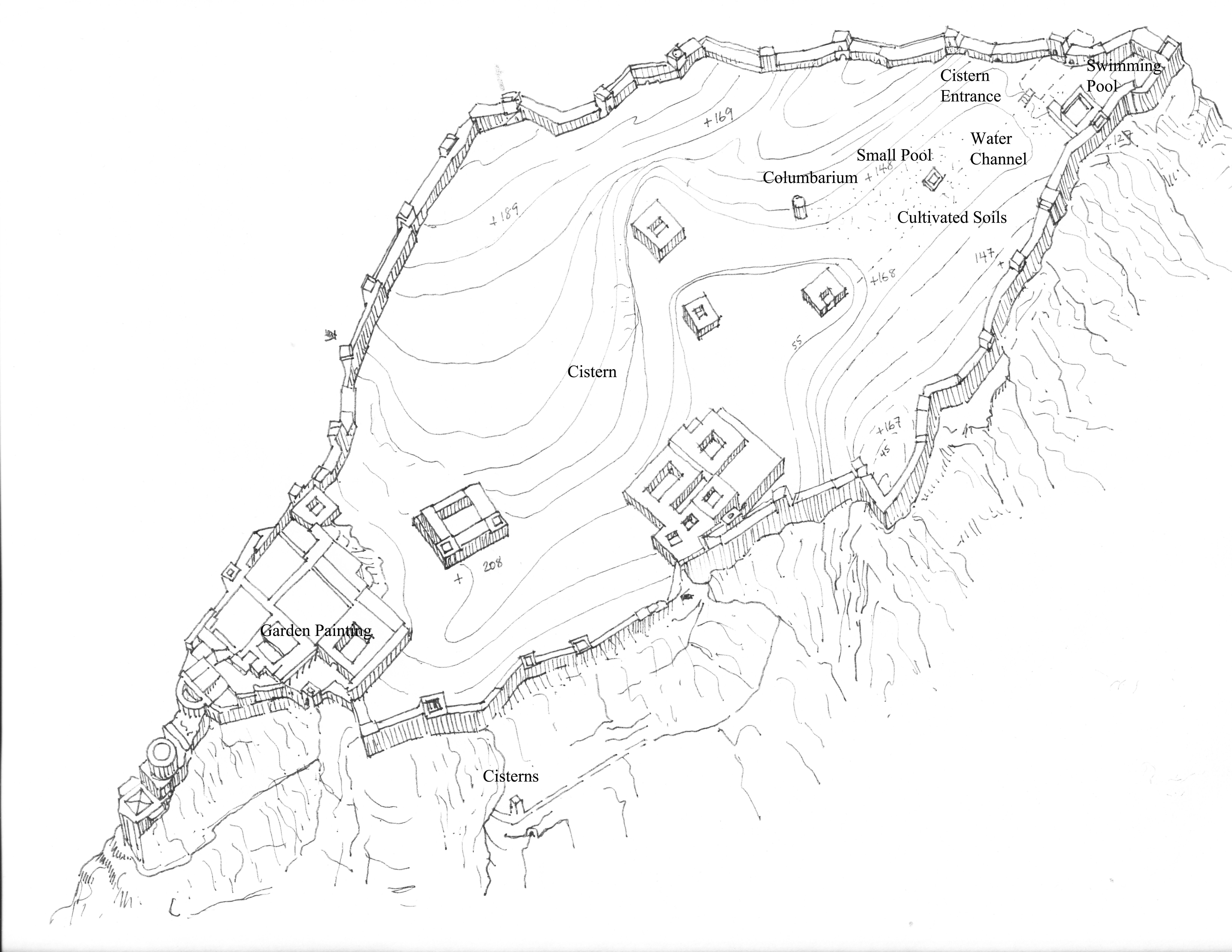
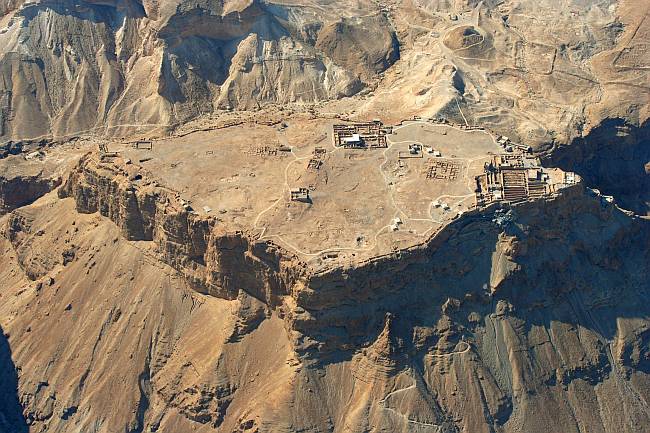
The earliest phases of Herodian building are seen in the Western Palace area. These buildings are architecturally similar to the Hasmonean palaces at Jericho and include the garden features of the southern area of the mountain top: water channels, cisterns, two swimming pools, and a columbarium. Gleason has studied the garden area briefly in 1990 and 1996 and found evidence of garden soil fertilized with domestic debris including potsherds. (Fig. 2) The sherd scatters are the main remaining evidence of this soil. It is possible that when the Zealots built the earthen fortification on the last night of the siege that the soils of the gardens may have been the quickest to remove. This or wind erosion appears to have removed any trace of the hilltop "being of rich soils...softer than any plain and given up to cultivation." The potsherd types indicate that the garden area was cultivated by both Herod and the Zealots. There is no evidence of cultivation in the south area during the Byzantine period. Aerial photographs dating prior to the excavations may suggest that the gardens were laid out and managed in the manner of Nabataean desert agriculture in the region and future work at the site may shed further light on the layout of the garden.
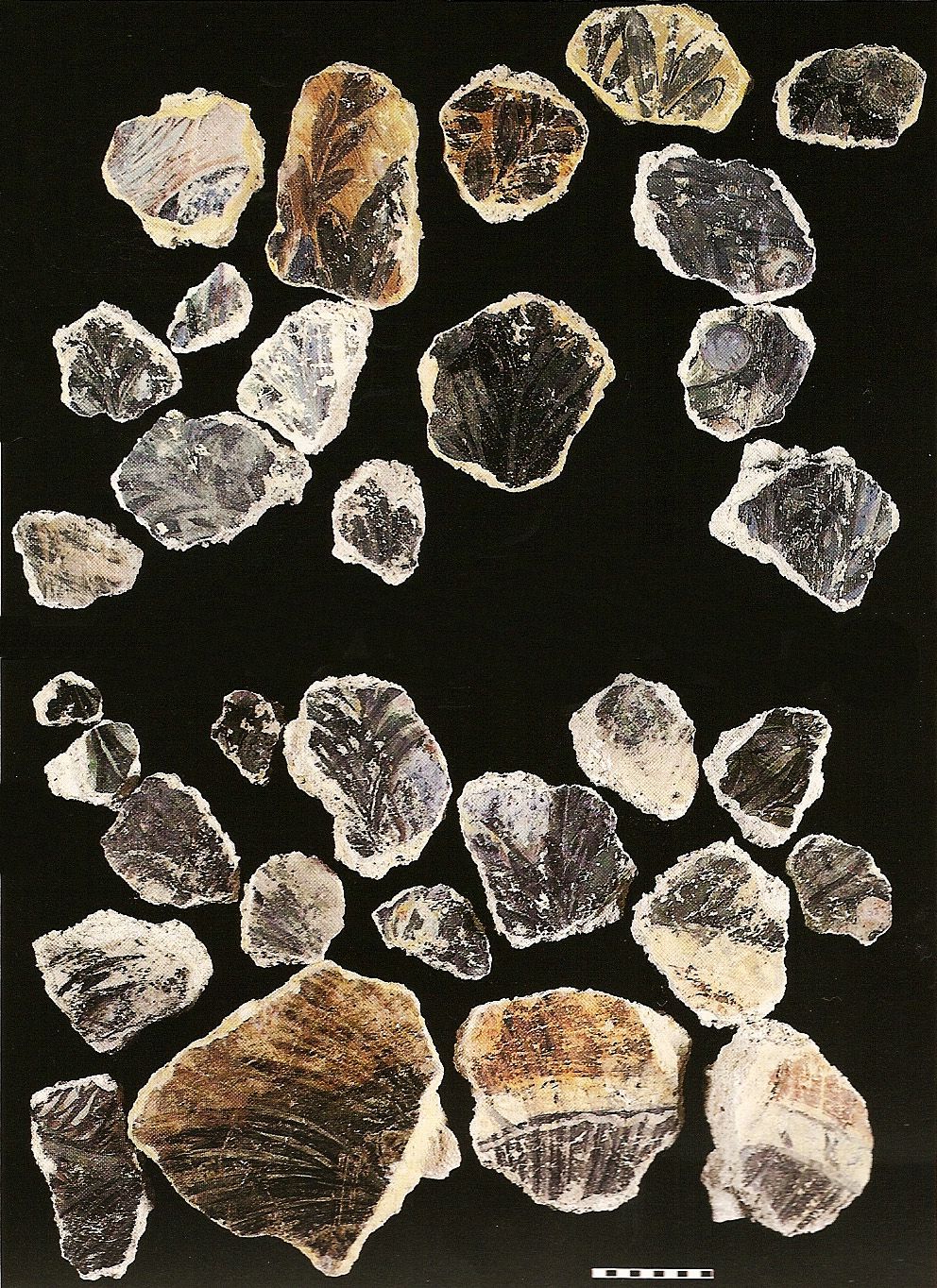
The Northern or Hanging Palace, the latest of Herod's constructions on the site, is a spectacular feature of architecture, engineering and landscape architecture. A series of platforms were created by alternately creating retaining walls and carving into the precipitous northern face of the mountain. On these platforms, he built a series of pavilions for dining, reception, baths and guest quarters. The contrast between the interior luxury of these rooms and the brilliant and utterly desolate landscape of the Dead Sea is sublime. Room 88, in particular, sheltered guests amidst frescos of luxuriant garlands Fig. 3), and only steps away from an overlook of the desolate landscape of the Dead Sea. Herod's reputation for "defying nature" is perhaps nowhere more refined than in this complex. (Josephus Antiquities of the Jews 15. 331-341).
Plans
Images
Bibliography
- G. Foerster, Masada VII: The Architectural Decoration. Jerusalem: Israel Exploration Society, 1996
- E. Netzer, Masada V: The Architecture and Stratigraphy. Jerusalem: Israel Exploration Society, 1994 worldcat
- E. Netzer The Palaces of the Hasmoneans and Herod the Great, Jerusalem: The Israel Exploration Society, 1999, 98-107 (worldcat)
- G. Kathryn L. "The Landscape Palaces of Herod the Great." Near Eastern Archaeology, 77.2 (2014): 76-97. worldcat
Keywords
- pleasure gardens (AAT:300008115)
- walled gardens (AAT:300008129)
- agriculture (discipline) (AAT:300054463)
Places
- Masada (Pleiades:687968)
- Masada (deserted settlement) (TGN:7001381)
- Iudaea (province) (Pleiades:981527)
- Judean Desert (desert) (TGN:8713913)