Sunken Garden
Dates
31 BCE - 4 BCE
Garden Description
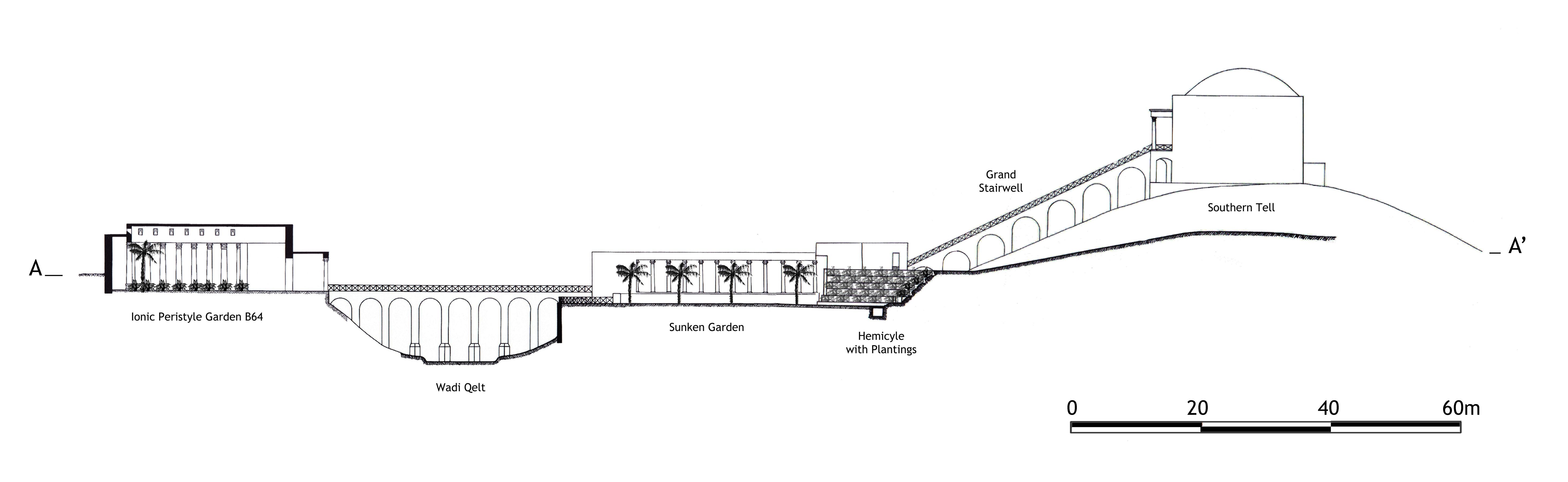
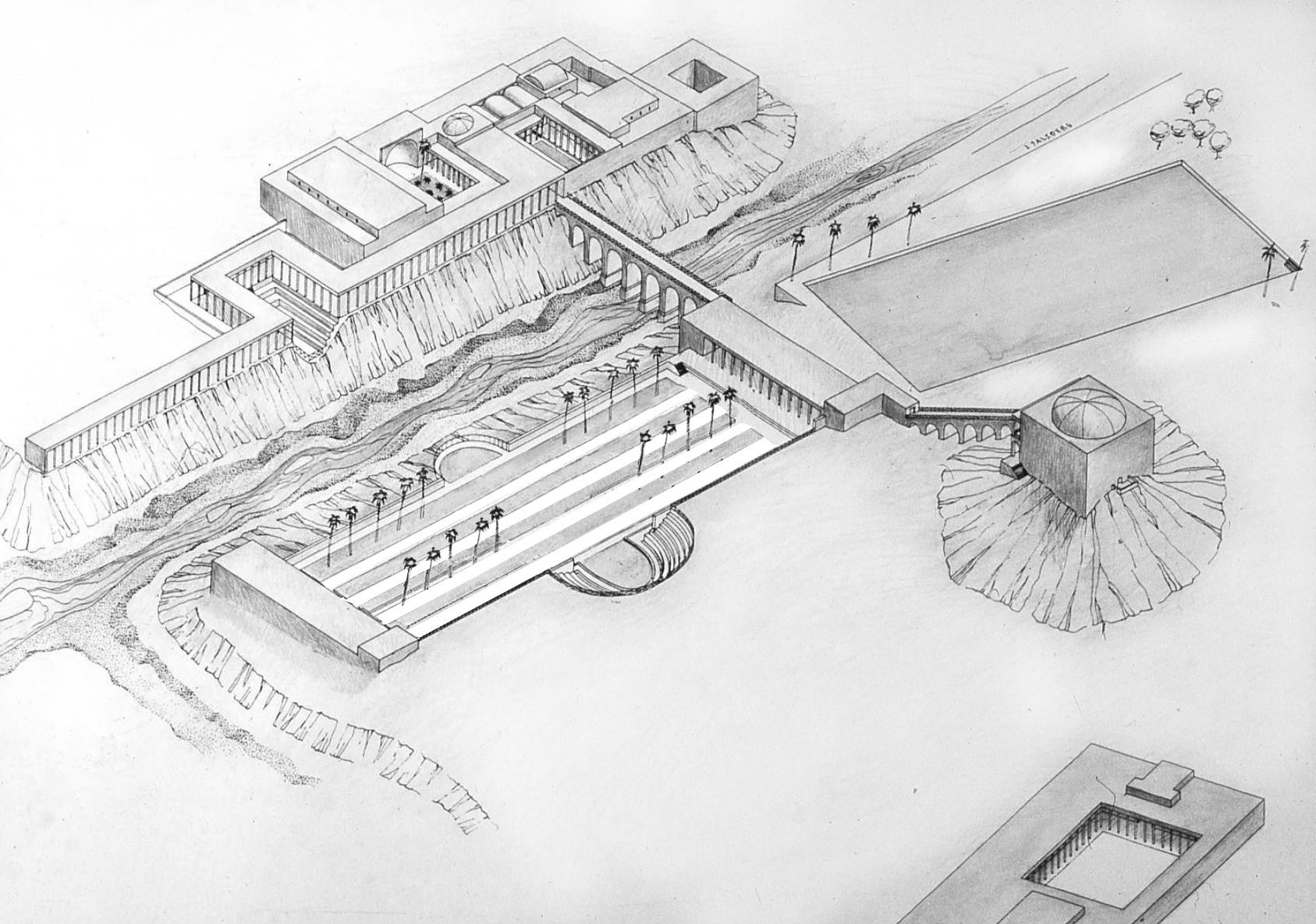
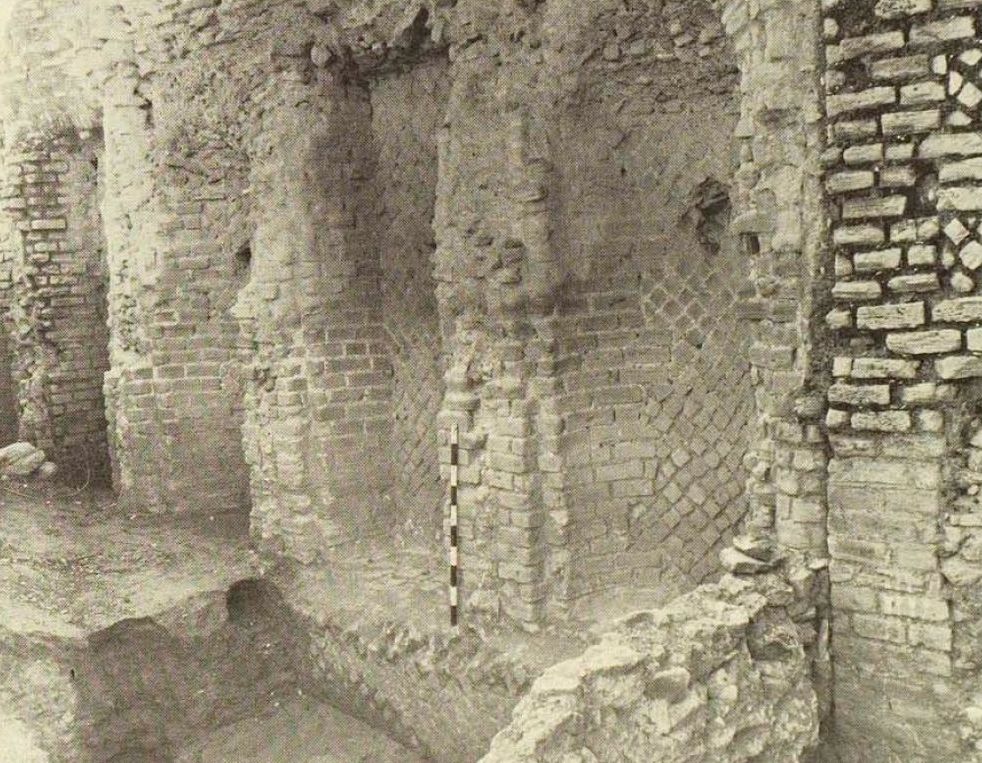
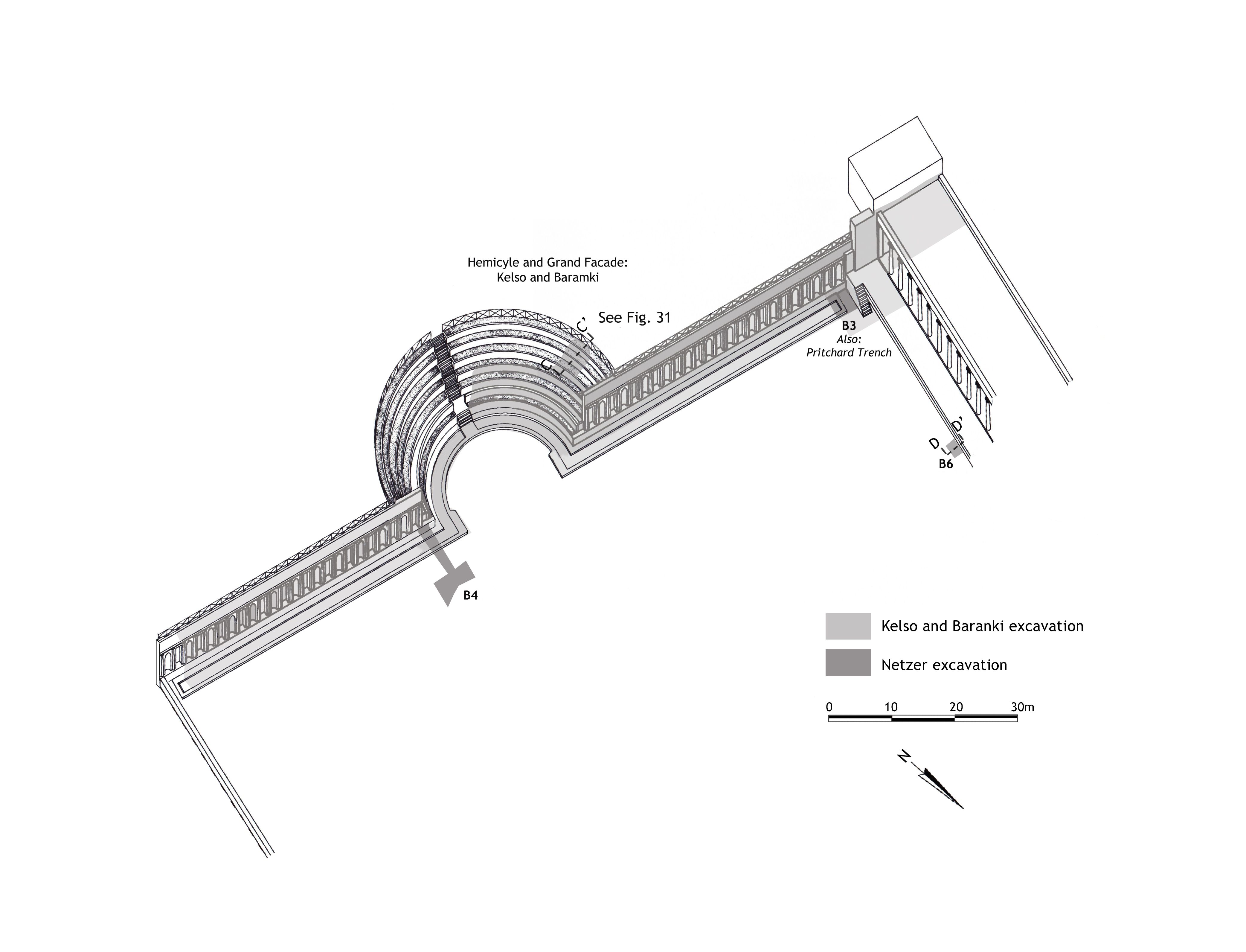
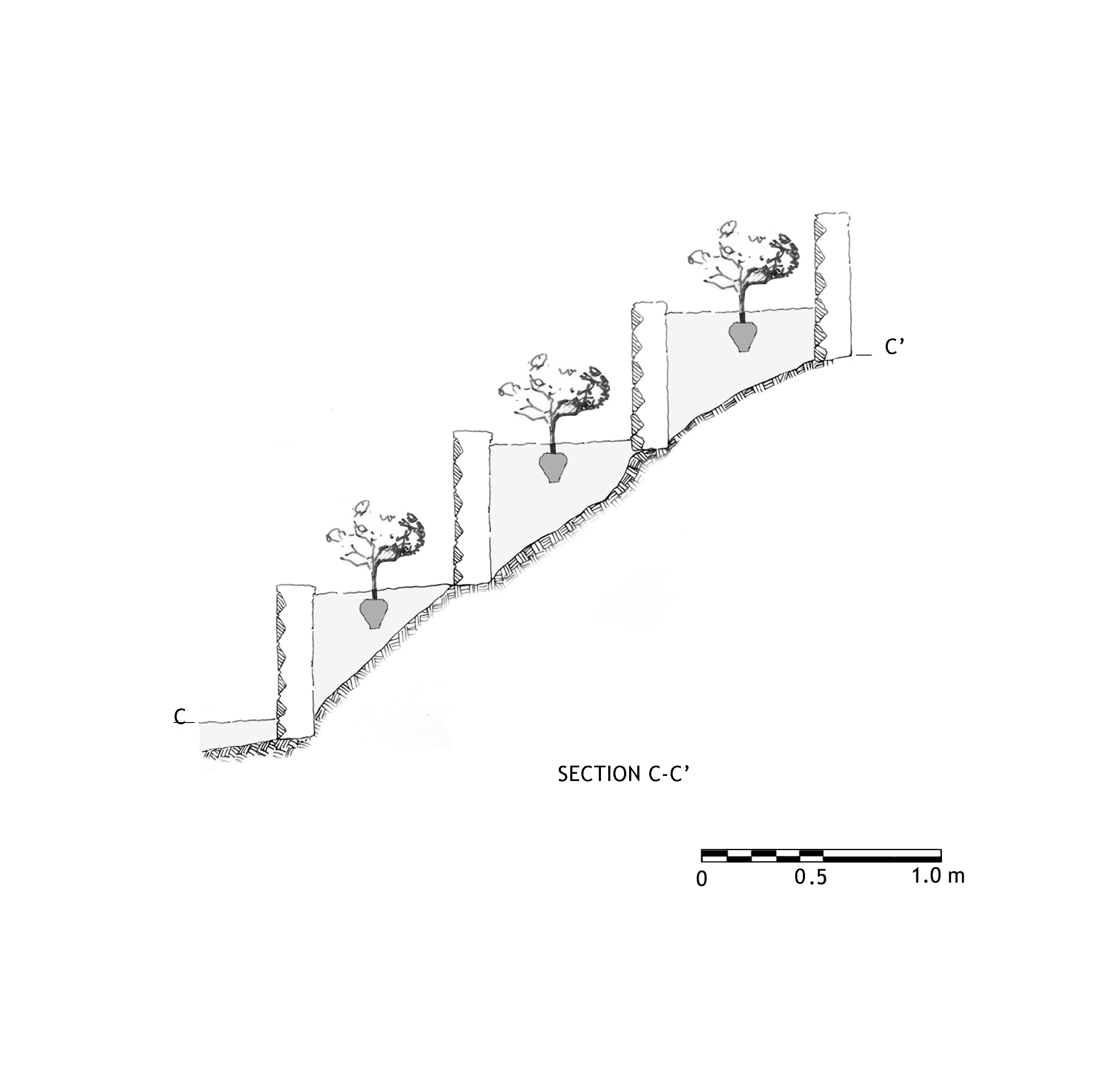
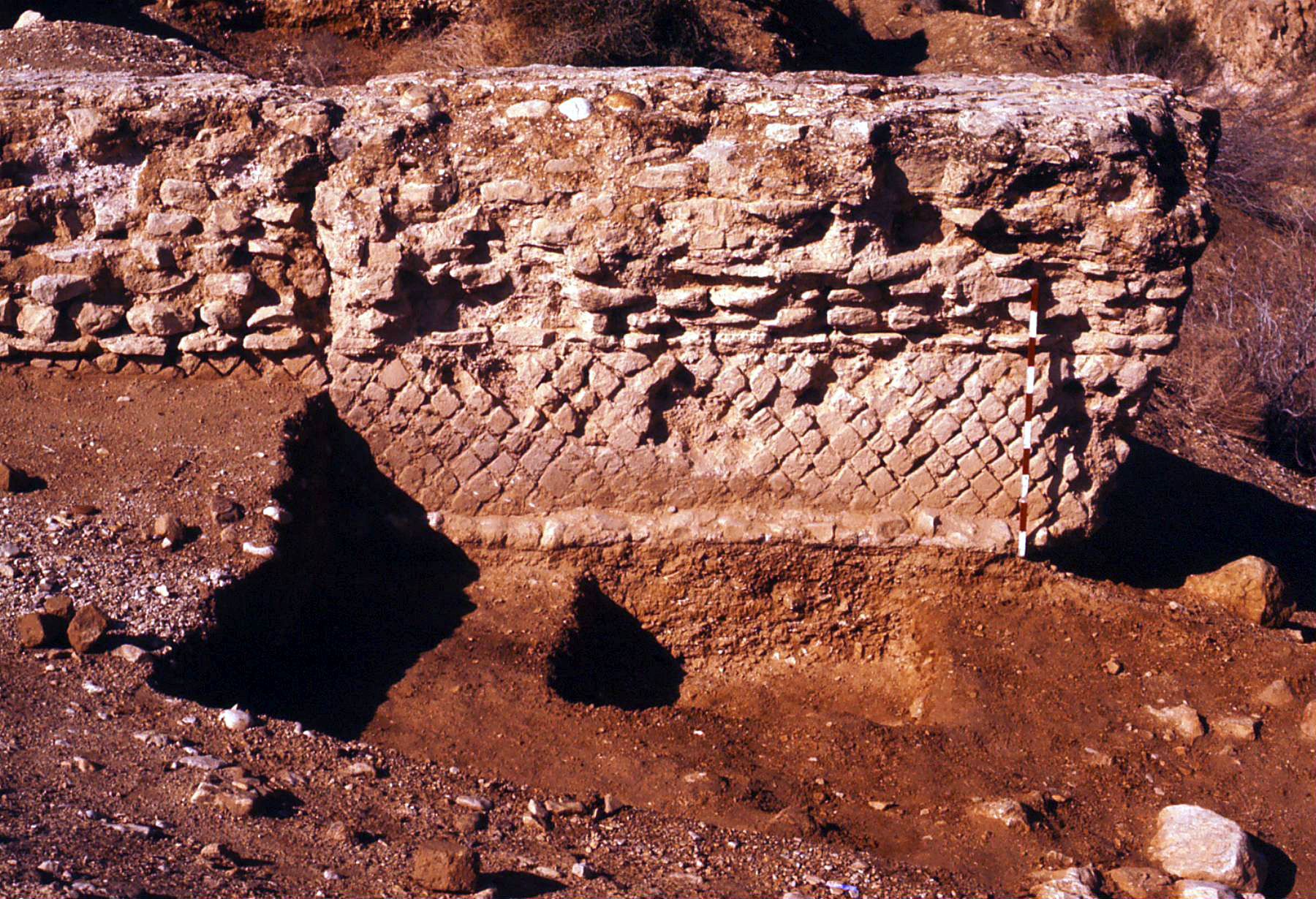
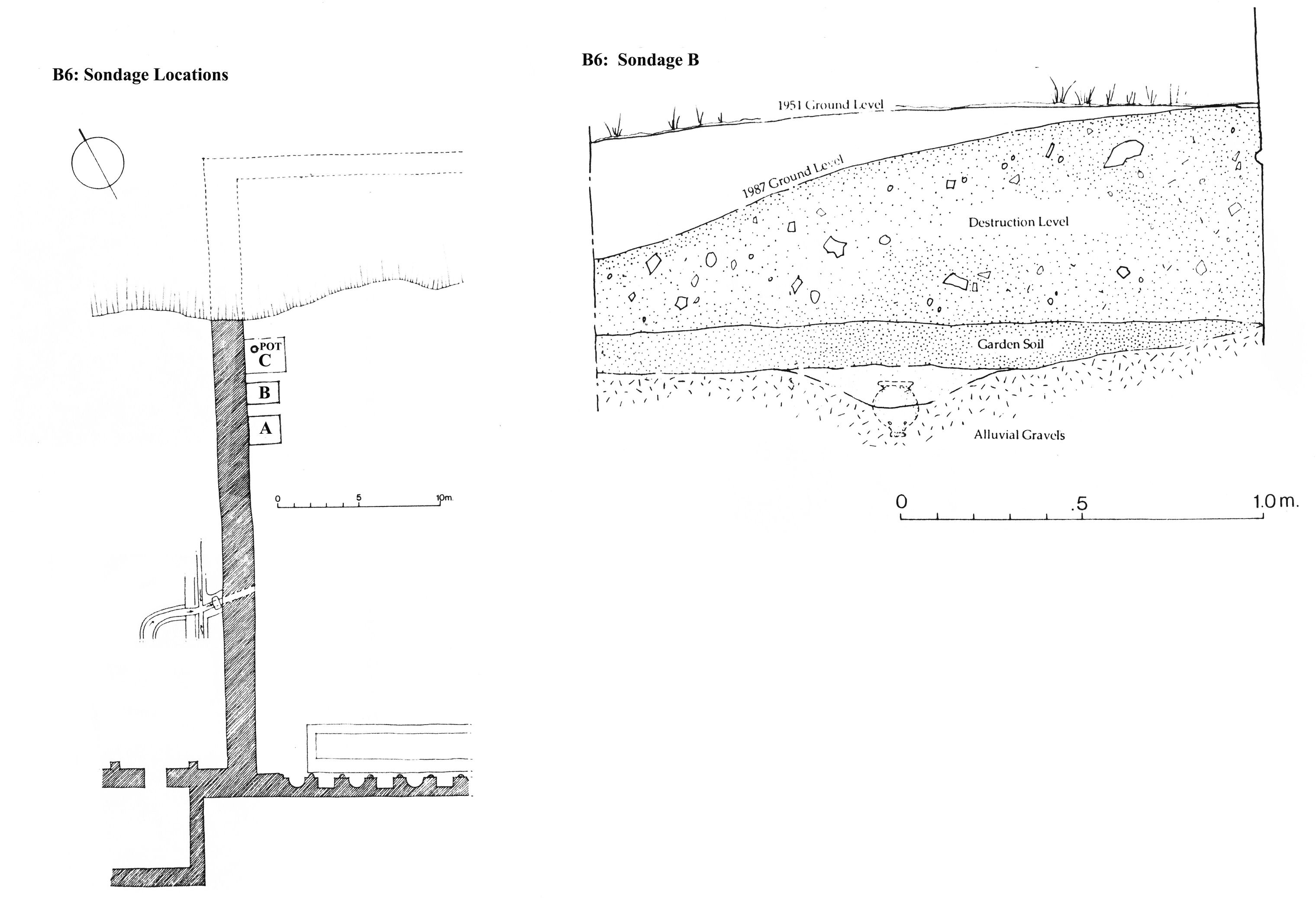
The monumental 'sunken garden' (B6), which measures 37.27 x 113.67m, lies largely unexcavated on the south side of Wadi Qelt, in alignment with the buildings and gardens described above (Fig 4). First explored in 1950 by Kelso and Baramki and again by Netzer in 1979, its perimeter is known, although the northern side has eroded into the wadi. Kelso and Baramki found a retaining wall on the south side, set into the slope of the hill and presenting a "grand facade" of semicircular and squared niches separated by columns in antis (fig 5). Jewish Law would have prohibited the placement of statuary in these niches, but urns with plants may have provided a satisfactory alternative and Stibel suggests that it served as a luxurious nympheum. The facade is interrupted in the middle by a great hemicycle (Fig 6), which formed a small stepped theatre, with benches not for spectators but for plants in perforated ceramic pots of the same general size and description as those found in garden B64 and elsewhere in the winter palace complex (Fig 7). A water channel ran along the floor of the sunken garden across entire length of the facade and cavea. Double porticoes along the top of the retaining walls, preserved on the east and west sides, allowed visitors to promenade around the sunken garden and look into it; what they observed remains buried beneath a deep landslide. In 1978, Netzer cut a trial trench along the foot of the east retaining wall and discovered a perforated pot at this lower level. (Fig. 8 and 9) Gleason examined the stratigraphy of this sounding in 1985 and noted that the pot was set into a level of cultivated soil.
Above the east end of the sunken garden rises the artificial tel with its pavilion, another unusual feature of Herod's palace. The pavilion was round, 16 m. in diameter, serving as a reception hall with four niches in each quarter. Below the hall, as seen in the northern palace at Masada, lay a Roman-style bathhouse for the pleasure of guests visiting the hall. The artificial mount was undoubtedly erected to offer splendid views of the landscape with its oasis estates of rare palms and balsam, and would, in turn, be a landmark visible from the road descending from Wadi Qelt and from across the plain.
A huge pool (90 x 40 m.) built to the east of the sunken garden formed an integral part of the third palace. The pool probably served not only for swimming but also for boating and aquatic sports. In contrast to all the other wings of the third palace, which were built in alignment with a single grid system, this pool deviates by ca. 30 to accommodate the slope of the hill, evidently to offer spectators a good view of the events. The difference in orientation was possibly obscured by trees and shrubs, was the case with the Pool Complex of the second palace.
Images
Bibliography
- G. Garbrecht, and E. Netzer, "Die Wasserversorgung des geschichtlichen Jericho und seiner koniglichen Anlagen," in Mitteilungen (aus dem Leichtweiss-Institut fur Wasserbau) 115, Braunschweig/Jerusalem 1991 worldcat
- K. Gleason, "Garden Excavations at the Herodian Winter Palace in Jericho, 1985-1987", Bulletin of the Anglo-Israel Archaeological Society, Vol. 7, 1987-8 Jstor
- K. Gleason, "A Garden Excavation in the Oasis Palace of Herod the Great at Jericho," Landscape Journal 12.2 (1993):156-67wordcat
- J. Kelso, James L. and Dimitri Baramki, "Excavations at New Testament Jericho and Kirbet en-Nitla," Annual of the American Schools of Oriental Research 29-30 (1949-51): 38-39
- E. Netzer, The Palaces of the Hasmoneans and Herod the Great, Jerusalem: The Israel Exploration Society, 1999: 13-64 wordcat
- Nielsen, Inge, Hellenistic Palaces,1994, 195-201 wordcat
- E. Netzer, The Hasmonean and Herodian Palaces at Jericho: Final Reports of the 1973-1987 Excavations, Vol. 1, Jerusalem: Israel Exploration Society, 2001 : 287-298 worldcat
- E. Netzer, and Garbrecht G, "Water channels and a royal estate of the late Hellenistic period in Jericho's eastern plains," in D. Amit, J. Patrich and Y.; Hirschfeld, eds, The Aqueducts of Israel. 353-365. JRA Supplement 46, R.I. 2002 worldcat
- J. Pritchard, "The Excavation at Herodian Jericho, 1951," The Annual of the American Schools of Oriental Research 32-3 (1952-4): 56-58. worldcat
- D. Langgut, and K. Gleason. "Identification of the Miniaturised Garden of King Herod The Great: The Fossil Pollen Evidence." STRATA: Bulletin of the Anglo-Israel Archaeological Society 38 (2020).
Keywords
Places
- Jericho (Pleiades:687917)
- Iudaea (province) (Pleiades:981527)
- Judean Desert (desert) (TGN:8713913)