House of the Nymphs (Maison des Nymphes)
Dates
Unspecified
Garden Description
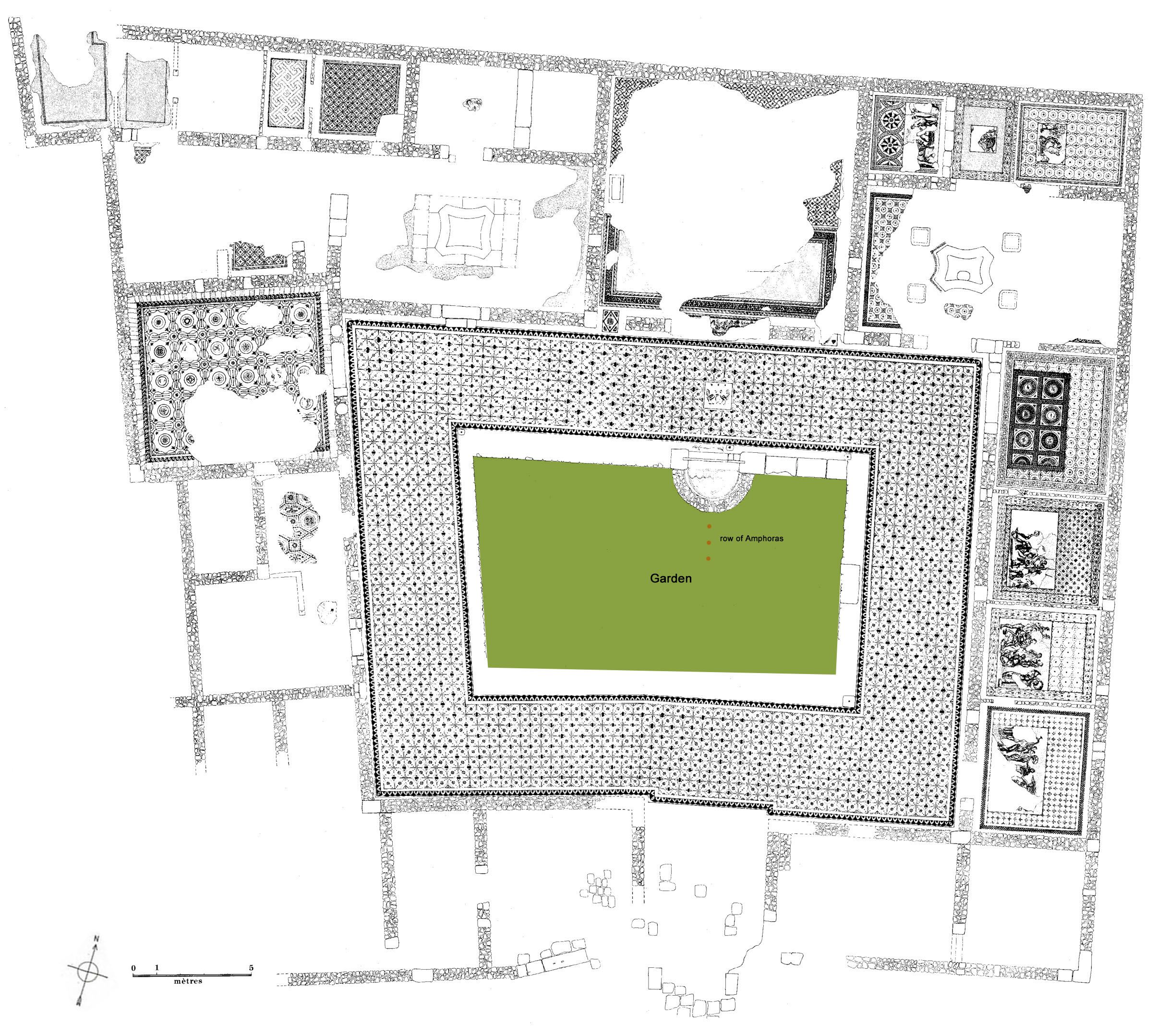
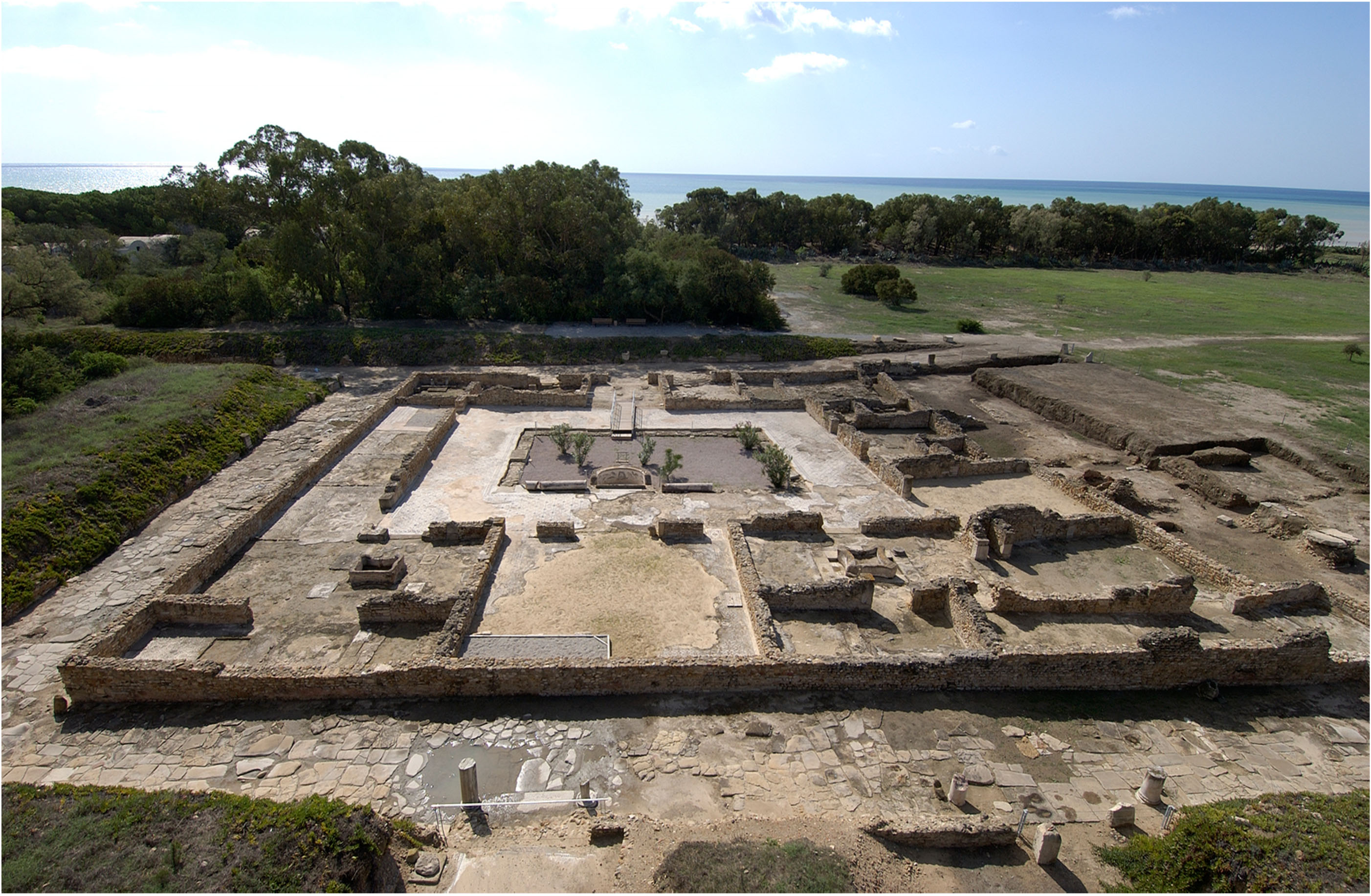
This large house (1500m²) laid-out around a peristyle-garden is known for its mosaic pavements figuring Homeric scenes. The peristyle is entered from the S. The N wing had a vast oecus-triclinium bordered on both sides by two apartments that each had two rooms and a passage to a pseudo-atrium (Plan view, Fig.1).
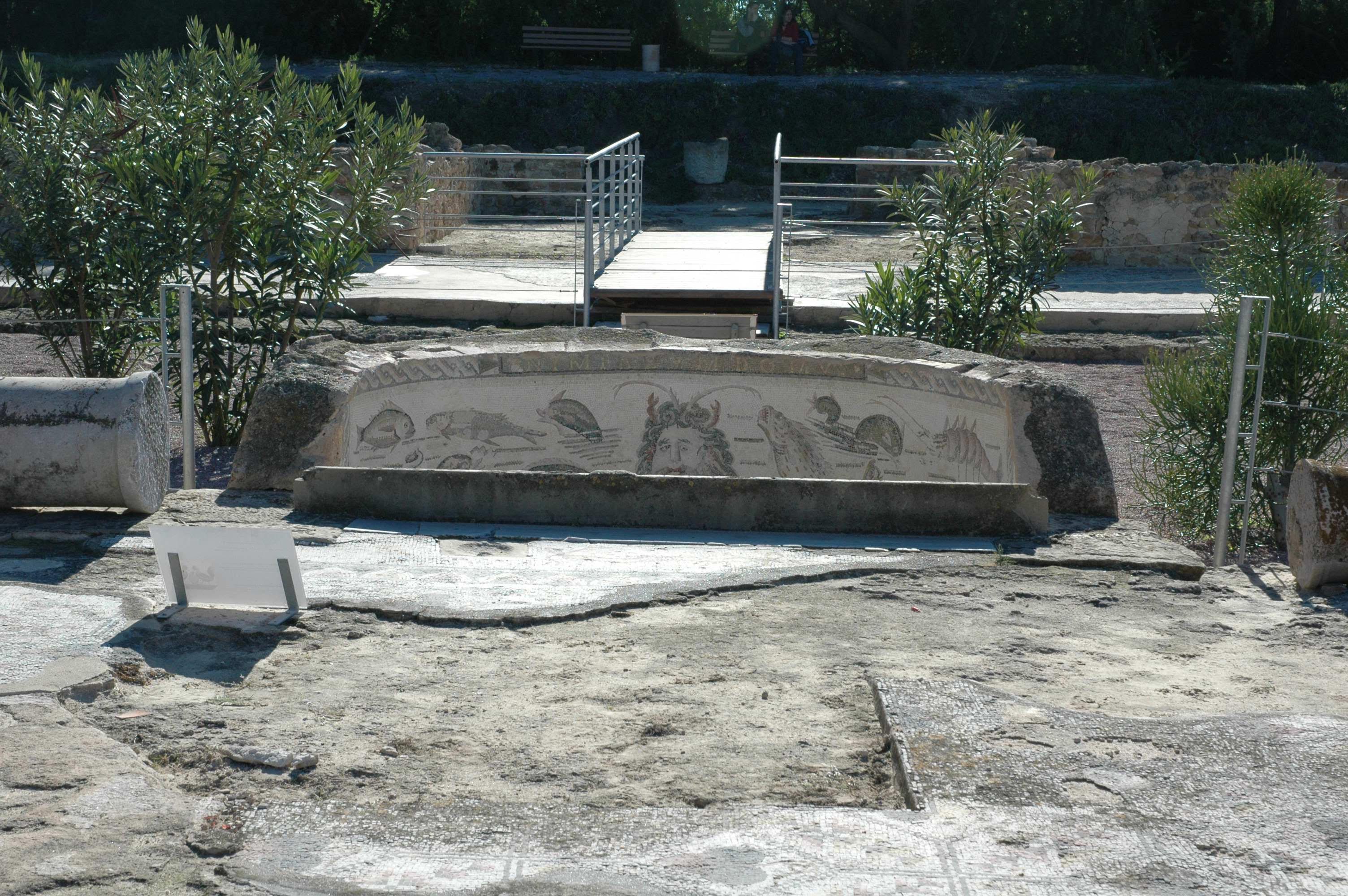
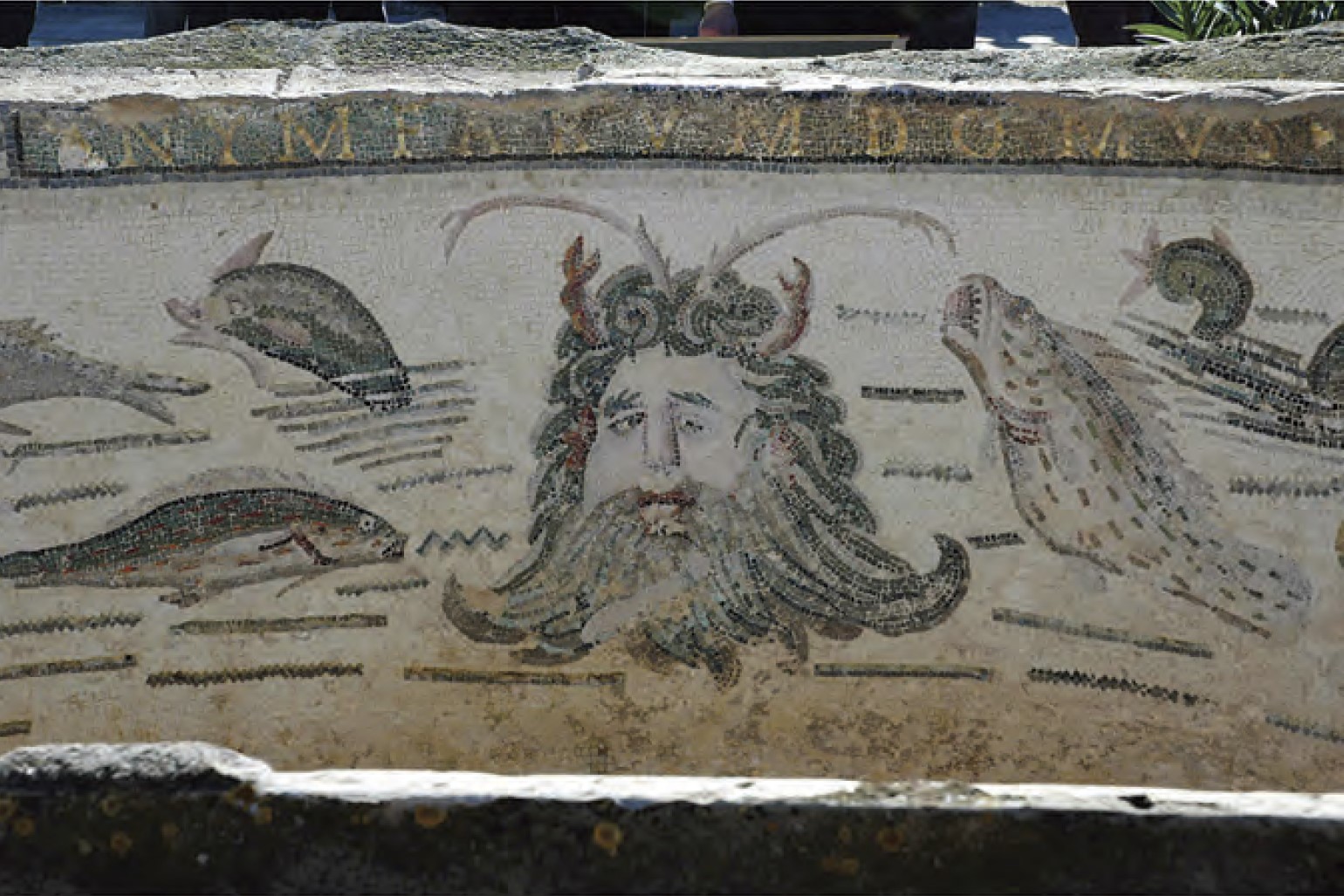
The peristyle was trapezoidal in shape (8.29 x 9 x 16. 15 m) and was bordered by 12 columns. Four porticos, 5m wide, enclosed the garden. The semicircular pool facing the oecus-triclinium, that projected into the garden was paved with a mosaic depicting a mask of Ocean among fishes and had an inscription "NYMFARUM DOMUS" quoting a passage from Virgil's Aeneid. According to the excavator, J.-P. Darmon, a row of broken amphoras that had served as planting pots were found along the central axis of the garden facing the oecus and the basin (Fig.2)
Plans
Images
Bibliography
- Bullo, S., Ghedini, F., Amplissimae atque ornatissimae domus: l'edilizia residenziale nelle città della Tunisia romana, Rome: Edizioni Quasar, 2003, p. 179-182. (worldcat)
- Darmon, J.P., Nymfarum domus, Les pavements de la maison des Nymphes à Néapolis (Nabeul, Tunisie) et leur lecture, Leiden, 1980, p. 9, pp. 85-6 et p. 146. (worldcat)
- Malek, A.-A., "Entre jardin et mosaïque: La verticalité et le merveilleux dans la vie quotidienne", in La Maison Gréco-romaine IX, Collection de l'Ecole Française de Rome n°352, Rome, 2005, p. 1335-1346. (worldcat)
- Malek, A.-A., "Mosaic and nature : "Cultural allusions to Nature in the Roman Domus", in Gardens of the Roman Empire, Volume II, eds., W. F. Jashemski, K. Gleason, A-A Malek, K. Hartswick, Cambridge University Press., NY, 2018, pp. 333-336, fig. 12.11A. (worldcat)
Keywords
- domusAAT:300005506
- peristyle housesAAT:300005452
- mosaics (visual works)AAT:300015342
- oeciAAT:300080791
- triclinia (rooms)AAT:300004359
- amphorae (storage vessels)AAT:300148696
- cachepotsAAT:300197605
- inscriptionsAAT:300028702
- Virgil