Rural Villa in Dietikon
Location
Garden
Rural Villa in Dietikon
Keywords
- axial planAAT:300121971
- corridorsAAT:300004294
- pergolasAAT:300006783
- piscinae (pools)AAT:300375619
- porticoesAAT:300004145
- villae rusticaeAAT:300005518
Garden Description
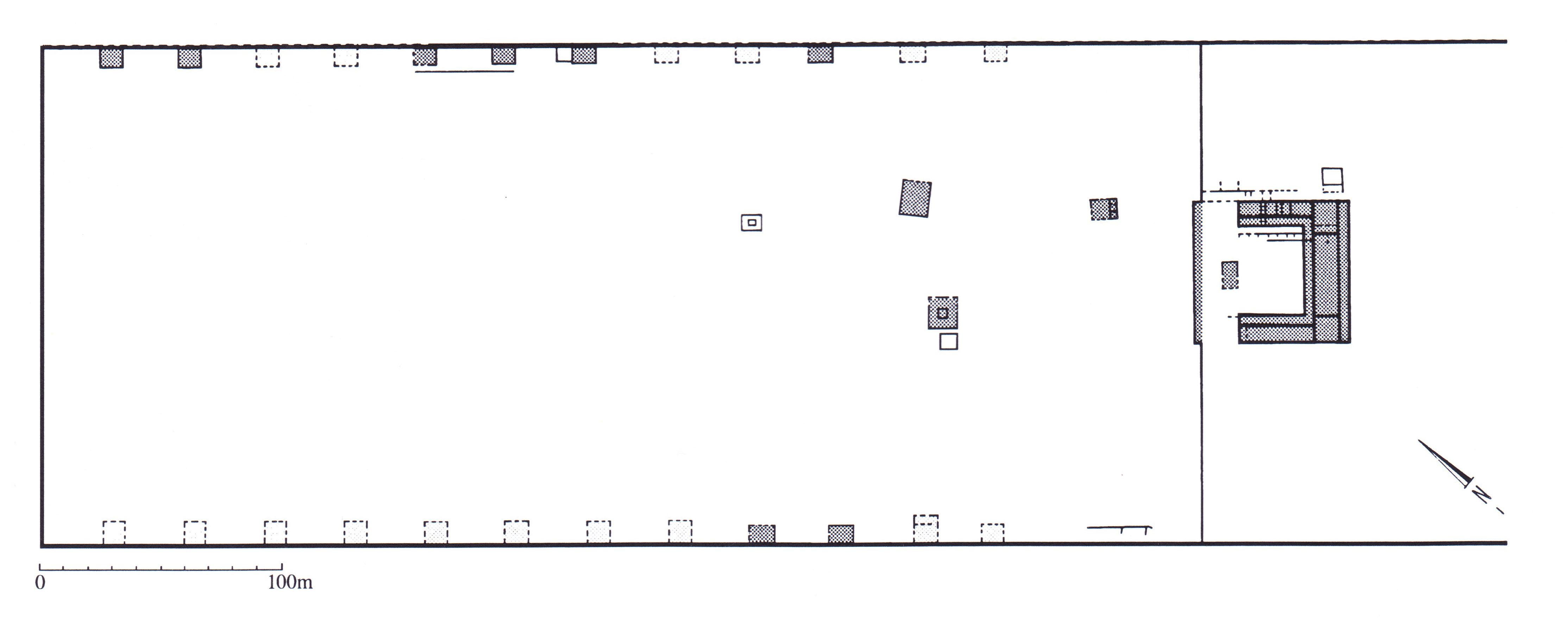
This villa rustica complex was built on a site at the bottom of a valley near and parallel to the river Limmat. Dietikon was situated on an important land and water traffic route from the Bündner Alps to Vindonissa and further north to the Rhine. Recent excavations supply valuable evidence for a garden in front of the entrance to a rural residence, giving insight into the appearance of other similar villas at which, for one reason or another, no physical remains of gardens have been retrieved. The excavations revealed a first villa with timber buildings dating to the Tiberian period, or early 1st century AD. Around the middle of the 1st century AD these first buildings were replaced by an axially-constructed stone-built villa complex with an enclosure, covering a total surface of 13 hectares (Fig. 1 and 4).
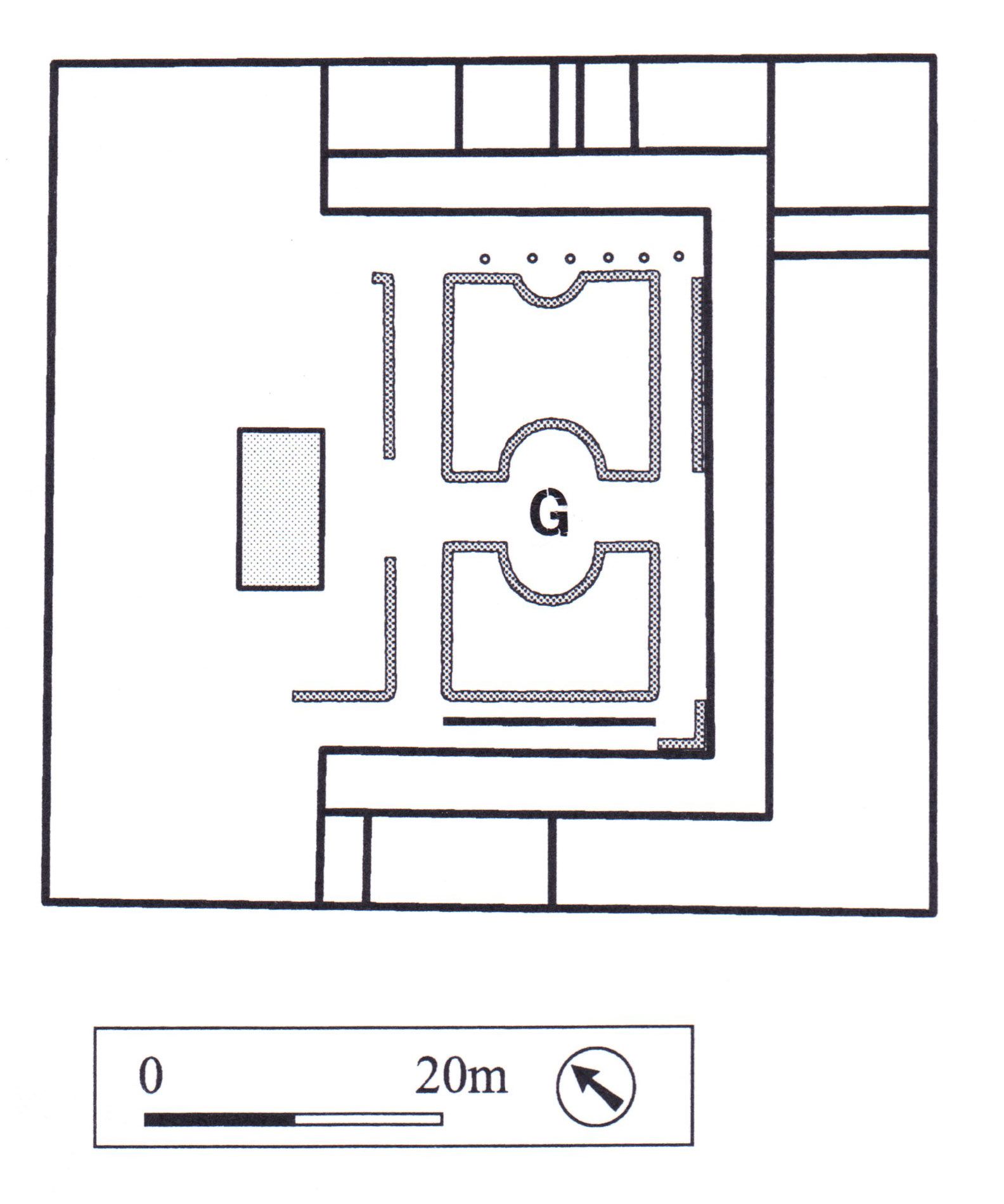
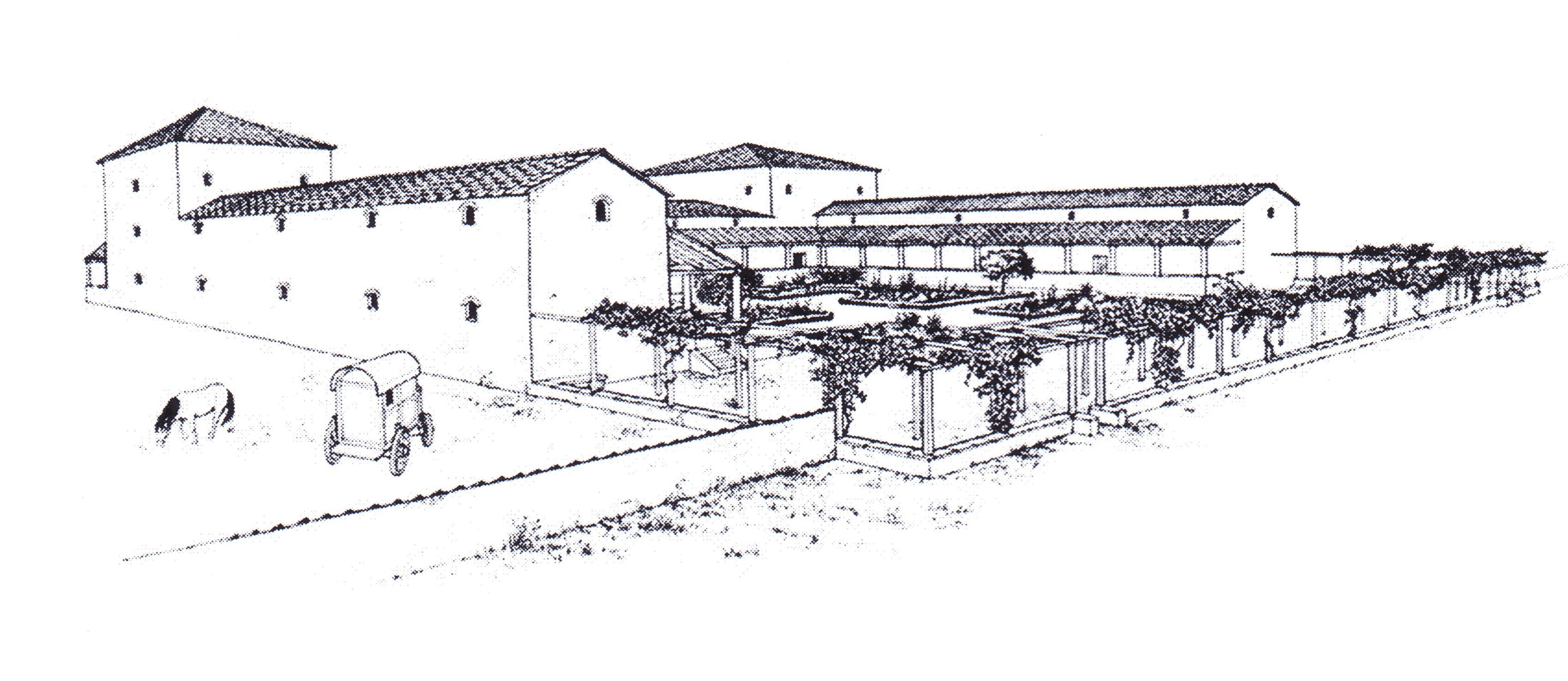
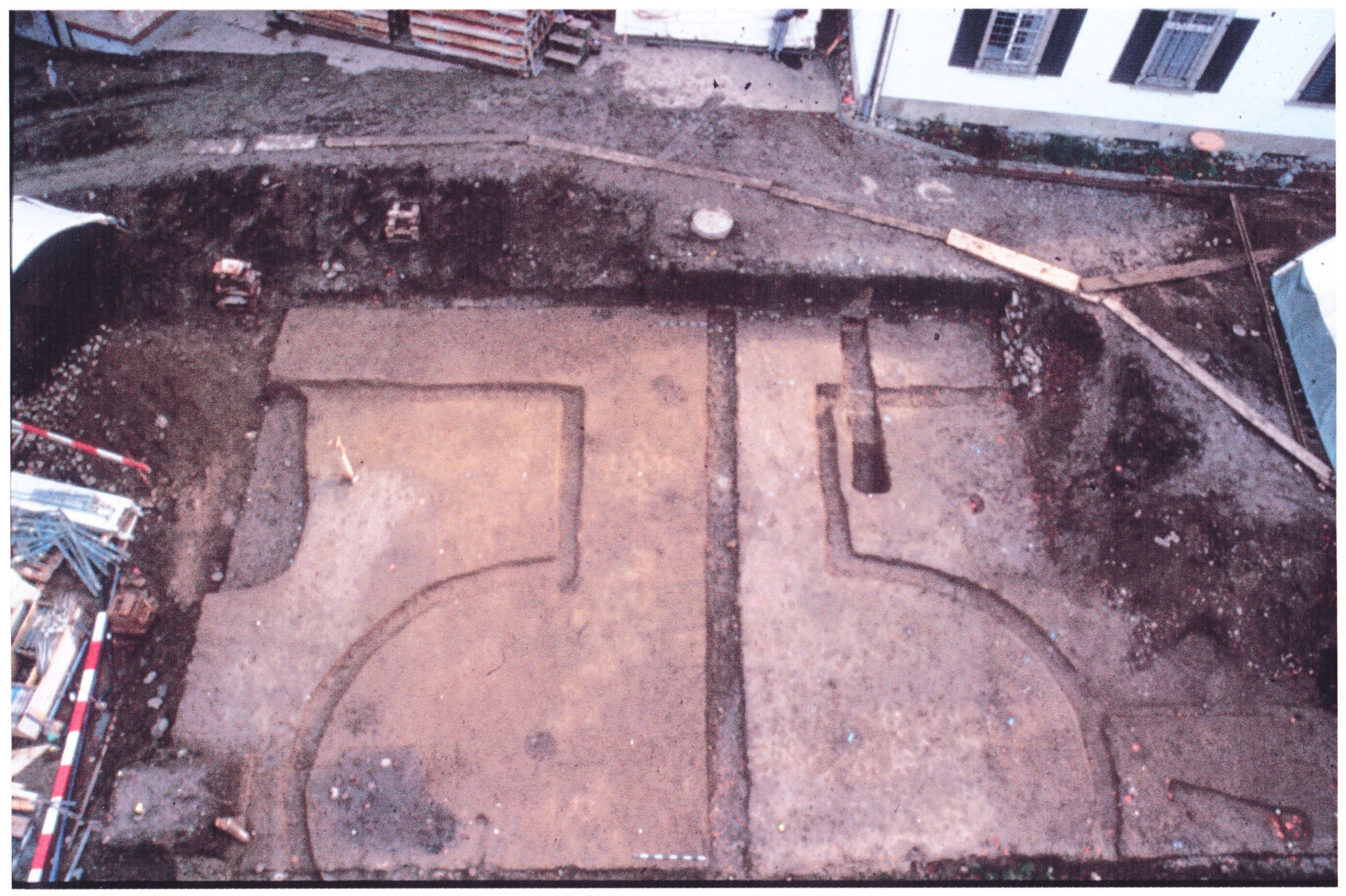
In the residential part of the farm (pars urbana) was a large corridor villa with two protruding wings enclosing a courtyard area on three sides. This area was planted as an ornamental garden in the mid-1st century (Fig 2, G in Fig. 2). On either side of the central path, garden zones were bordered by bedding trenches, 20-25 centimeters deep and 20-40 centimeters wide. The line of plantings flanking the path are curved to form two niches (Fig. 3). In Dietikon, digging of planting trenches would have been necessary because the massive layers of construction debris deposited to level this area for the building would have hampered a successful growing of garden plants. The archaeobotanical analysis of several soil samples revealed little of relevance, but box hedges have been suggested as the vegetation in the bedding trenches, forming a low living edge to these formal garden beds, and possibly climbing plants such as ivy along the porticoed façade. Shallow pits in the plots surrounded by the hedges may be the remains of bedding pits for trees or shrubs. A timber pergola in the courtyard ran parallel to the northeast wing of the house. To the west of the courtyard garden was a timber-lined pool fed by a stream, interpreted as a fishpond. Bedding trenches for hedges surrounded it.
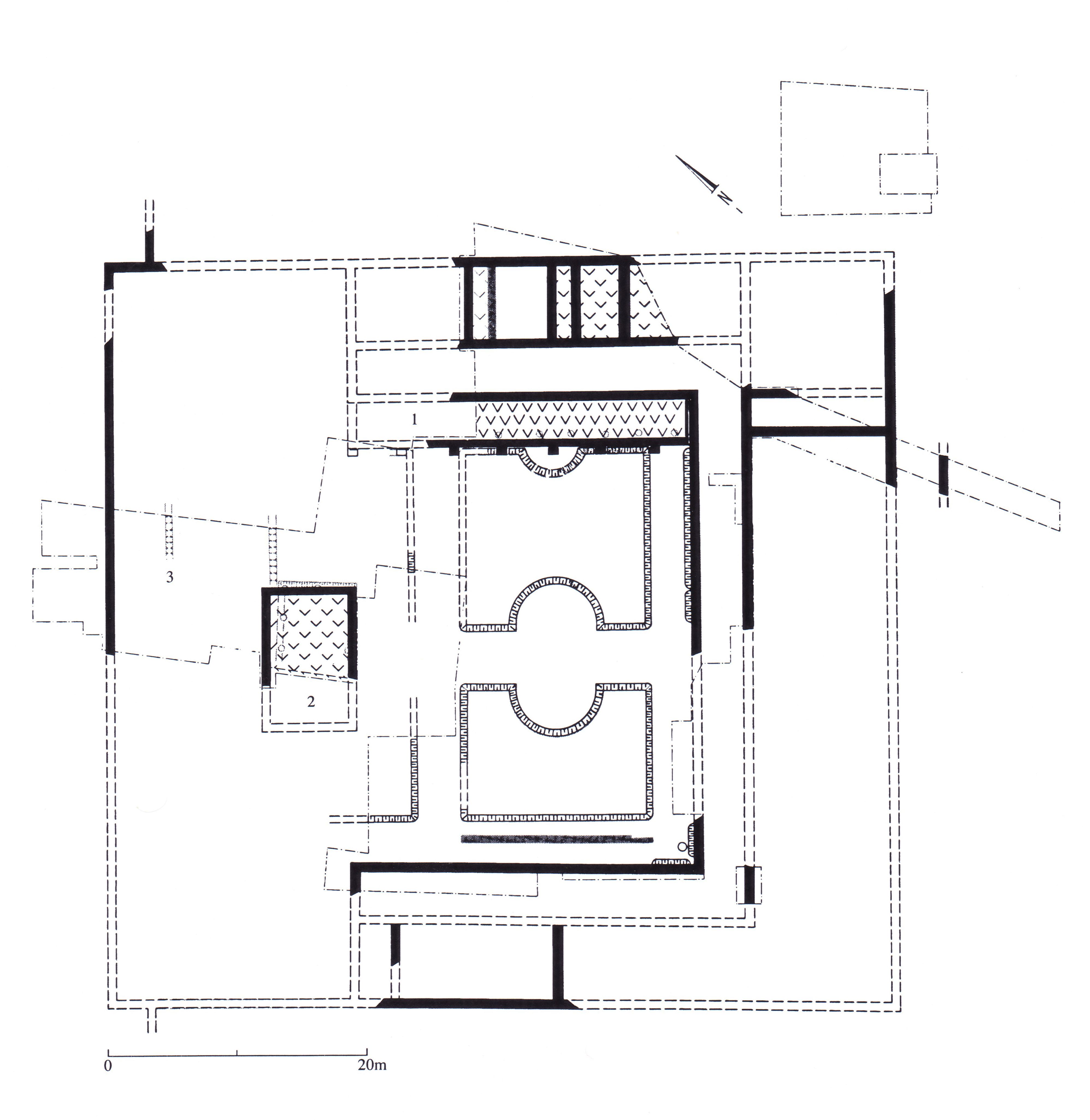
In the late 1st century, around AD 70, the timber-lined pool in the west was replaced by a masonry pool lined with water-proof plaster on the same spot (Fig. 5). This was possibly fed by water from a small stream. At the same time, the timber pergola was dismantled, its place taken by a large masonry pool, 3 x 22 meters in plan. The planting pattern of the courtyard garden was retained (Fig. 5) until after the middle of the 2nd century when the pools were destroyed and the garden leveled.
Plans
Images
Dates
Garden: Late 1st century (~70 CE) - Middle of the 2nd century
First buildings: Early 1st century CE - Middle of 1st century CE
Stone-built villa: Middle of the 1st century CE
Bibliography
- C. Ebnöther, "Die Gartenanlage in der pars urbana des Gutshofes von Dietikon ZH," Archäologie der Schweiz 14, 1991:250-256. (worldcat)
- C. Ebnöther, Der römische Gutshof in Dietikon. Monographien der Kantonsarchäologie Zürich 25, Zürich, 1995, pp. 36-45, 49-50, figs. 21, 36-37,41-42. (worldcat)
- L. Flutsch, U. Niffeler, F. Rossi, eds., La Suisse du Paléolithique à l'aube du Moyen-Age (SPM) V. Epoque romaine/Età Romana, Basel, 2002, p. 143, fig. 140. (worldcat)