Antinous' tomb (Fig. 1, n. 25)
Province
Region
Region IV
Location
Location Description
DESCRIPTION
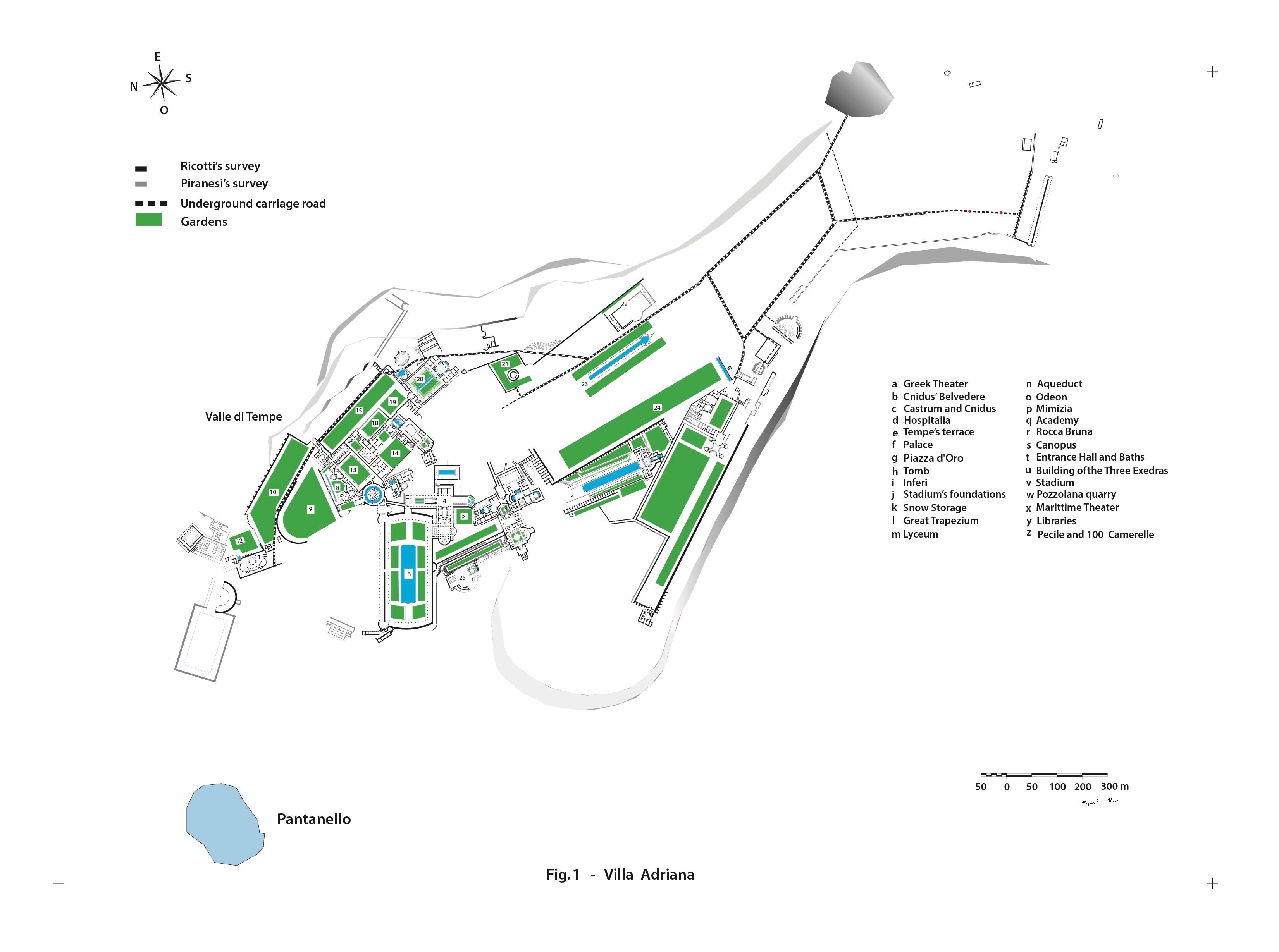
Villa Adriana, erected by emperor Hadrian at the beginning of the II cent. A.D., occupies a vast area of 126 hectares. It was a beautiful estate strategically located near Tivoli and, at the same time, not very far from Rome (WINNEFELD 1895; KÄHLER 1950; AURIGEMMA 1961; RAKOB 1973; BROWN 1964). Prior to the Hadrianic settlement, an ancient villa, dating back to the late republican time, already stood there. Probably it belonged to Hadrian's family and, as a matter of fact, many scholars think that Hadrian chose this estate as the ideal one because he already knew the place and was attached to it (LUGLI 1927). Certainly he preserved and restored the original building and made it the nucleus of his private quarters.
The realization of this magnificent residence must have been a cherished dream of Hadrian, and he must have planned it long before becoming an emperor. This is the only way to explain how the works for its construction began immediately after his election and his return to Rome in 118 A.D. Hadrian died in 138 A.D. when his ideal residence was nearly completed. Nearly, because there was still some work to be done. Some important halls of the Great Baths were not finished, and the model for a Stadium, found among the ruins of his last building-yard in the quarters of the stonecutters (CAPRINO 1996-97; SALZA PRINA RICOTTI 1992-93, p. 73; SALZA PRINA RICOTTI 2000, pp. 144-147), was never brought to the unknown place where Hadrian had planned to build it. The Emperor's death put an abrupt end to all activities, and some of the gardens he planned to create, and for which fountains and pavilions had already been built, were never done or, if ever they were completed, seem to have been soon abandoned (SALZA PRINA RICOTTI 1992-93, pp. 000-000). As a matter of fact after him Villa Adriana was only partially lived in by his successors and was solely used for occasional visits. It became just one of the many country houses pertaining to the imperial praedia. Some of the existing gardens (Fig. 1), the ones nearer to the center of the residence and the monumental ones, were maintained and irrigated up to the end of the Roman Empire, a fact which is now proved by the concentration of extractable lead found in their soil, and which is due to the use of lead pipes for irrigation (FOSS ET ALII 1990; FOSS 1989-90; FOSS 1992; TIMPSON ET ALII 1994; FOSS, SALZA PRINA RICOTTI 1996). As a consequence of Hadrian's death, some others sites, which he had planned to be attractive and important, got no irrigation at all, thus their soil contains only a minimal quantity of extractable lead, about the same amount that is ordinarily found in modern agricultural fields.
Garden
Antinous' tomb (Fig. 1, n. 25)\
Keywords
Garden Description
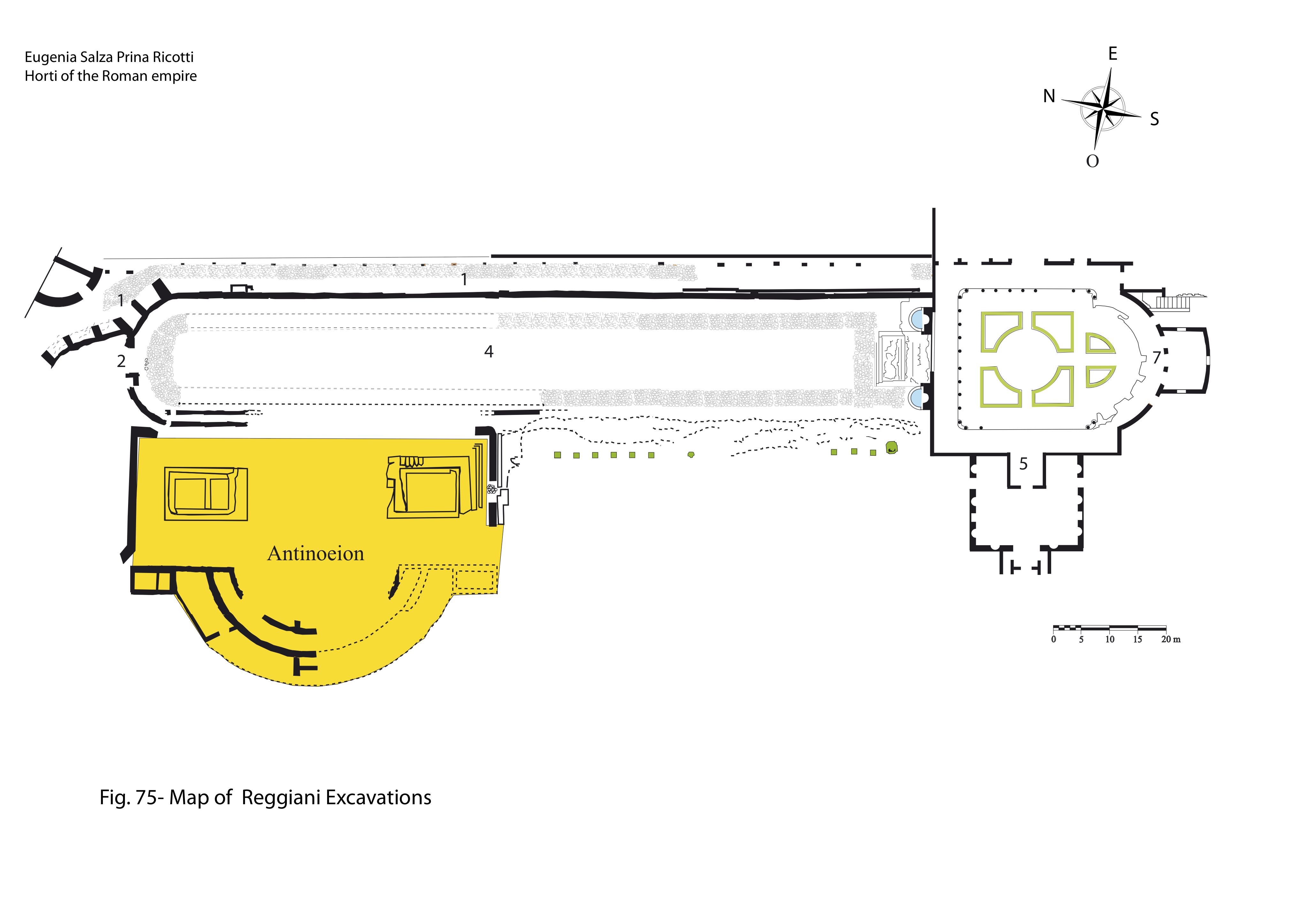
When, after having asked Dr. Reggiani to write about the garden emerged by her excavations, I began to study the map she kindly sent me (Fig. 75). Mari had informed me that the big structure beside the entrance gate was a Nymphaeum, but this seemed to me really improbable: It was too big and not in scale with the rest. I soon discovered that not only it was not a Nymphaeum but that it was a tomb and I easily connected it with Antinous, the same Antinous who had been deified by the Egyptians (E. SALZA PRINA RICOTTI 2002-2003). Hadrian was more than pleased to accept him as a god, thus he could build to his memory a very important monument, something that he could never do for a simple boy. A temple more than a tomb.
I told my discovery to Dr. Reggiani and she decided to send Mari - who up to then had been absolutely sure of his Nymphaeum theory - to do a probe and test my hypothesis.
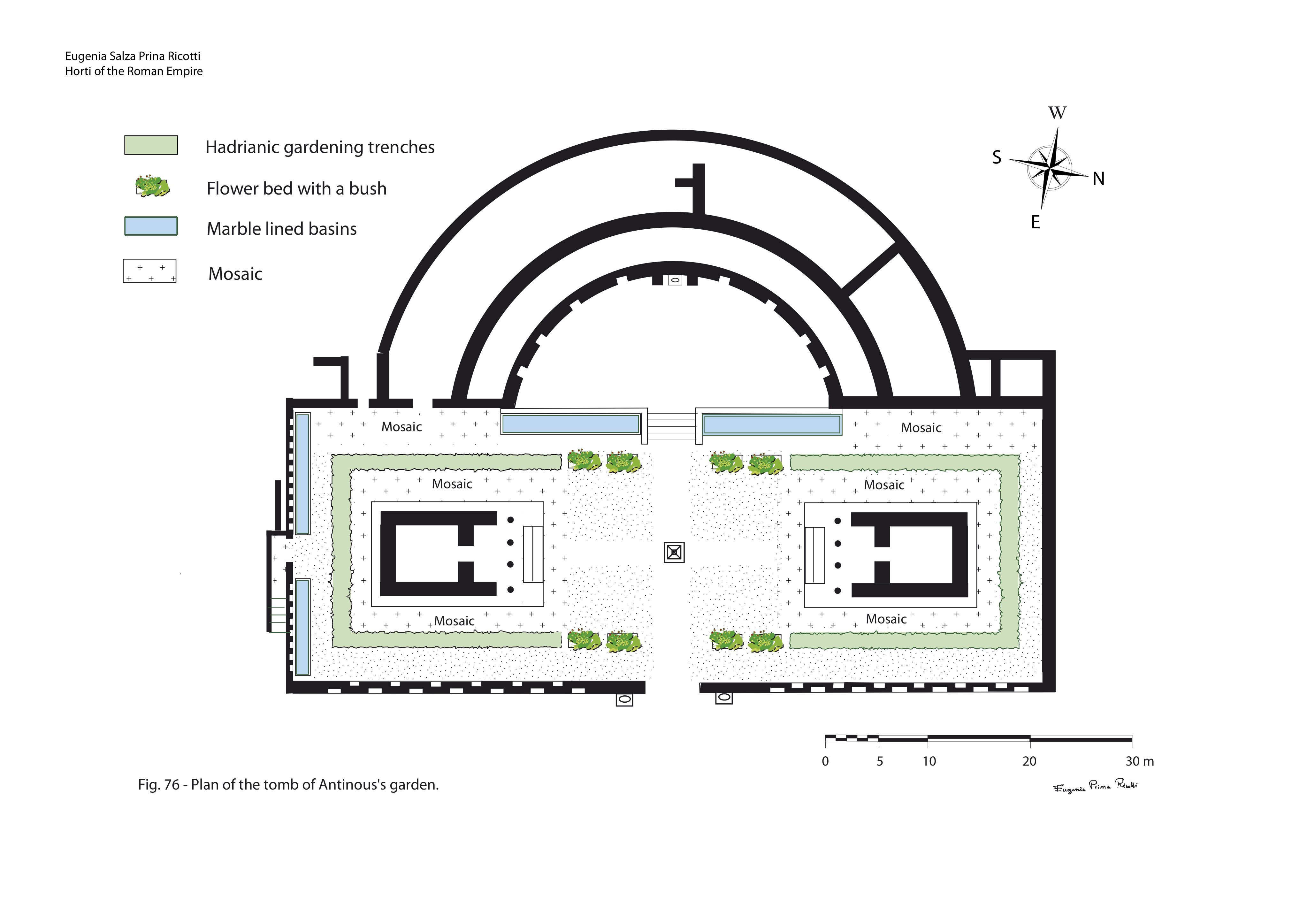
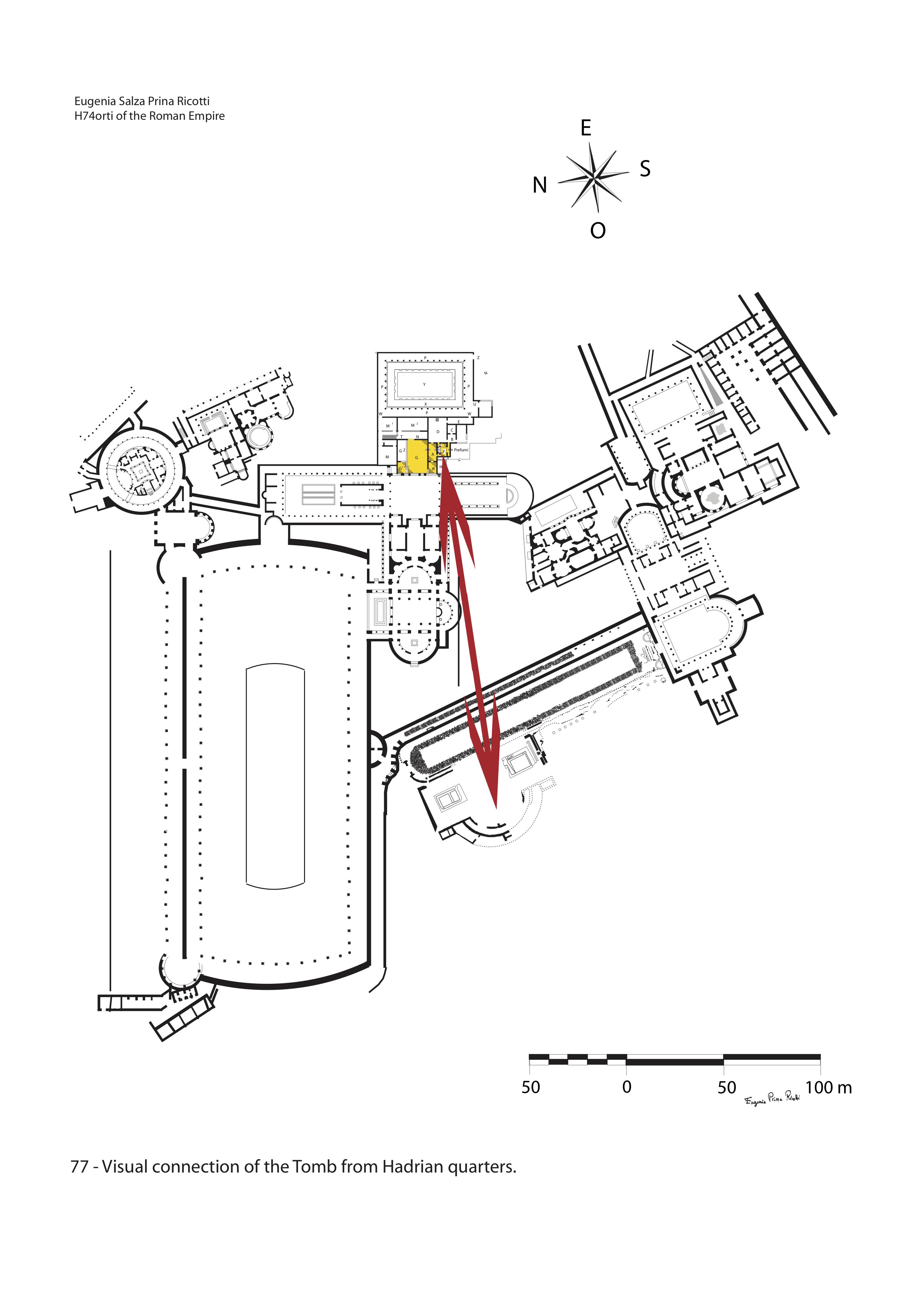
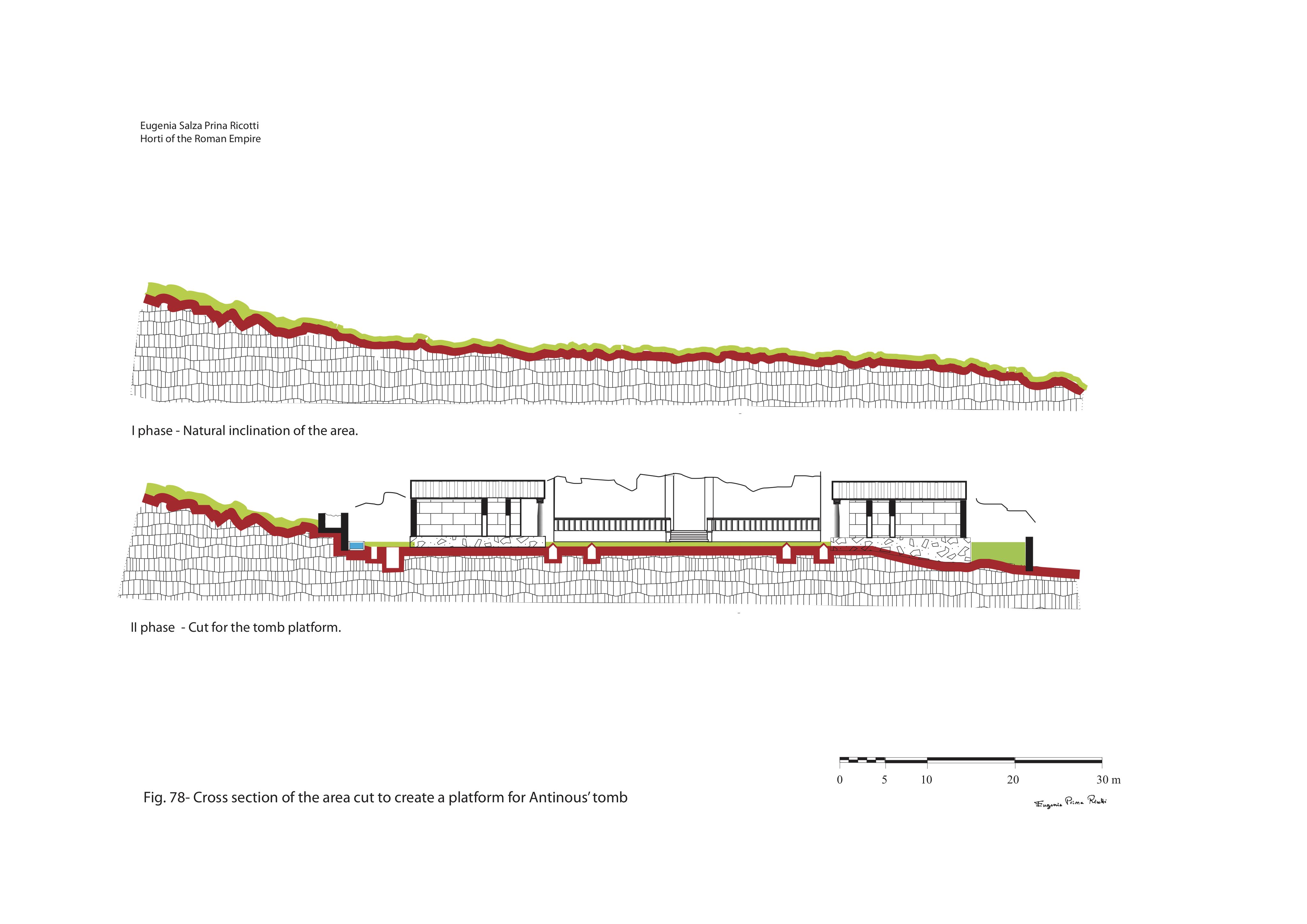
The excavations proved that I was right and that, also if never completed, there the tomb was made. First of all after his return from his second voyage around his empire Hadrian searched for the right place where to build it and drew his plan (Fig. 76). The place he chose was in direct view from his own quarters so that he would be able to see it - as we say -, " first time in the morning, last time at night" (Fig. 77). As the area was slanting, the first thing he did was to prepare a platform for the temple and the surrounding garden (Fig. 78).
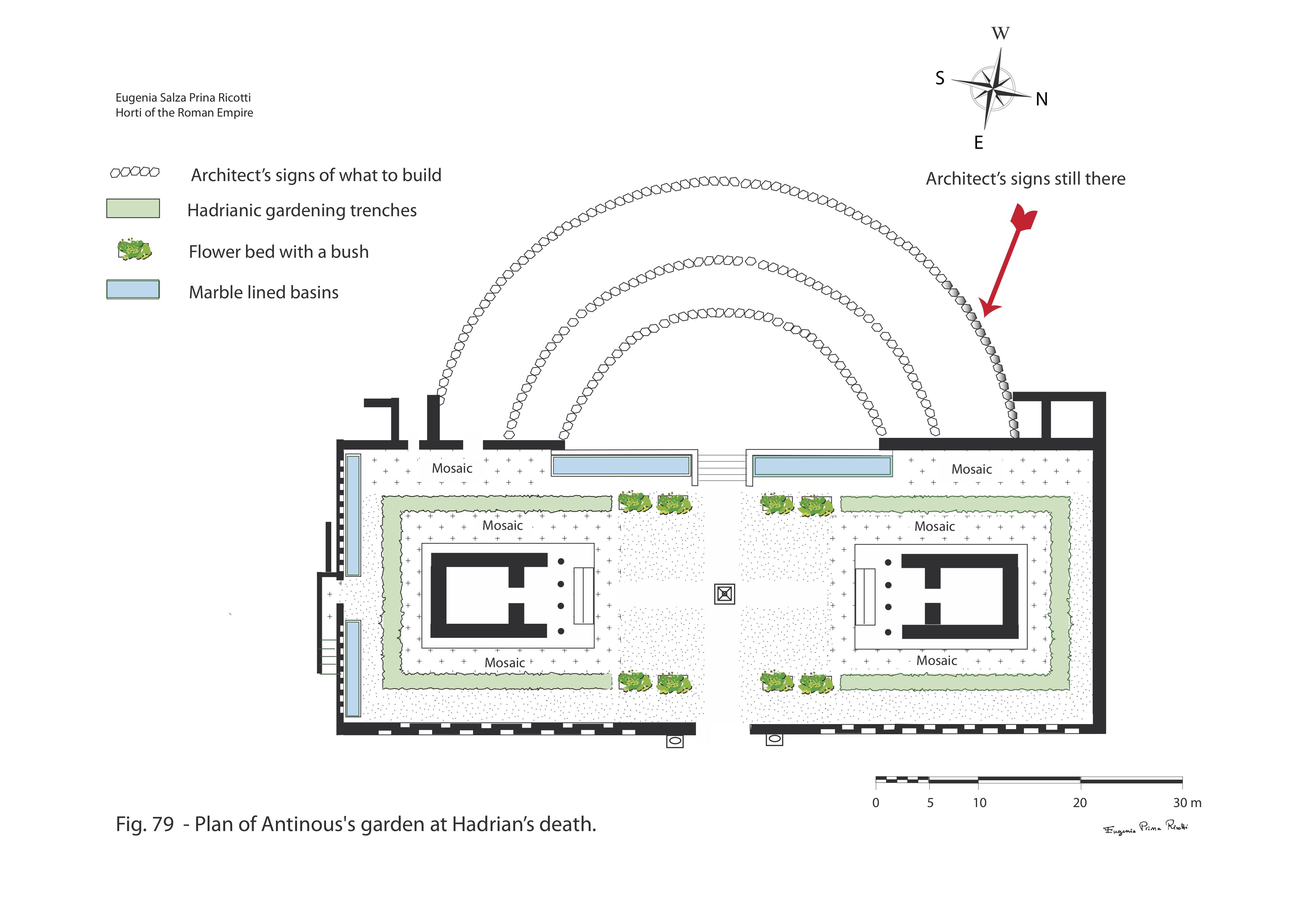
From our researches we understood that at Hadrian's death in the 138 A.D. the garden with its Egyptian temples and its enclosure was the only thing to have been completed. The part where the temple-tomb would have been erected (Fig. 79) was only indicated by the big stones with which the architects traced on the ground the principal lines of their plans (VITRUVIUS, I CENT B.C.; W. JONES). However the garden was there and from the soil analysis we also learned that it did survive until the end of the Empire and that was proved by the content of lead of its soil, the same quantity of the one we find in the Canopus' area and in the other monumental parts of the Imperial Residence created on the plots of never irrigated land acquired by Hadrian, and tended up from the first II century's years till the end of the Roman Empire (J. E. FOSS, 1989-1990; J. E. FOSS e E. SALZA PRINA RICOTTI, 1996).
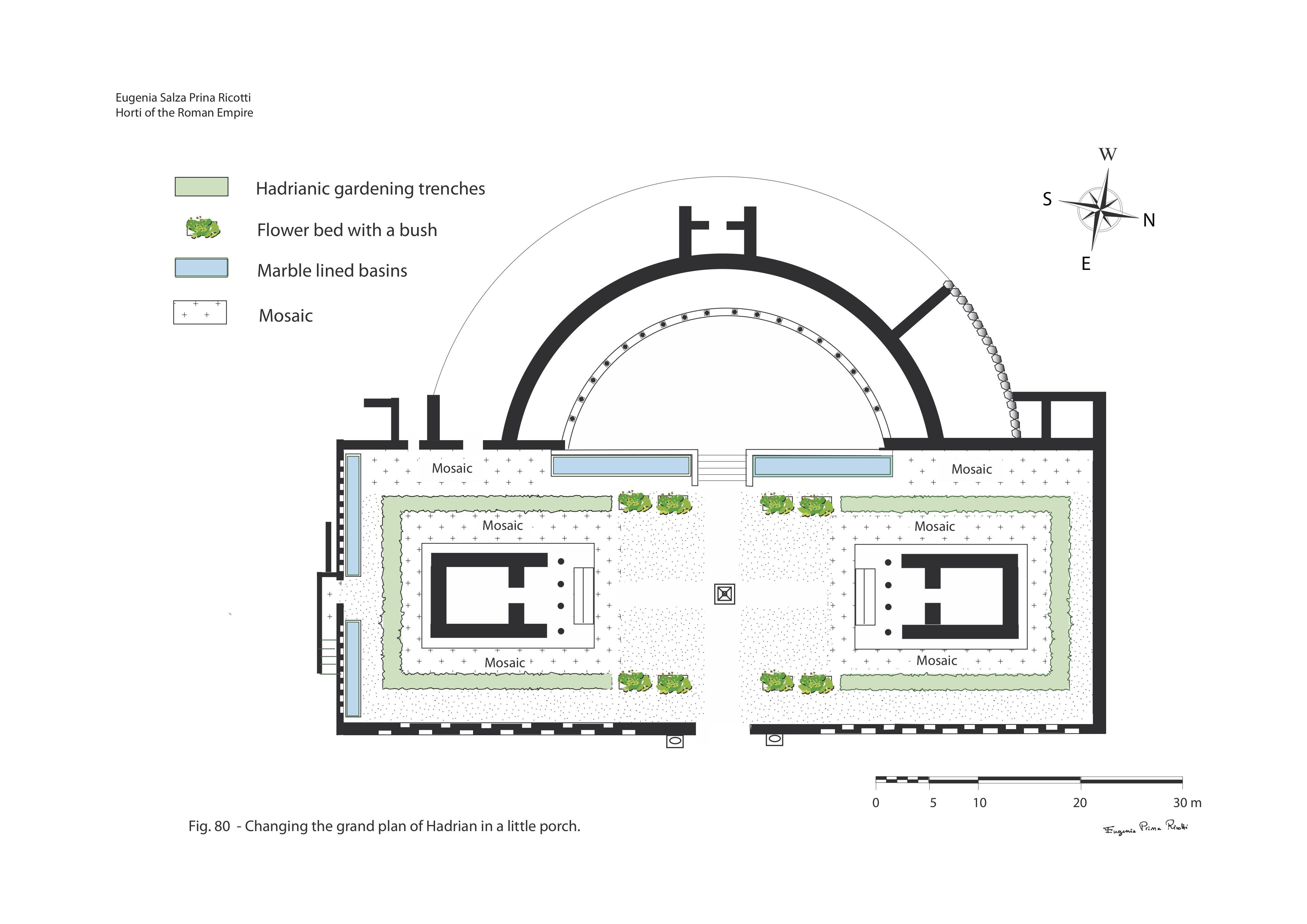
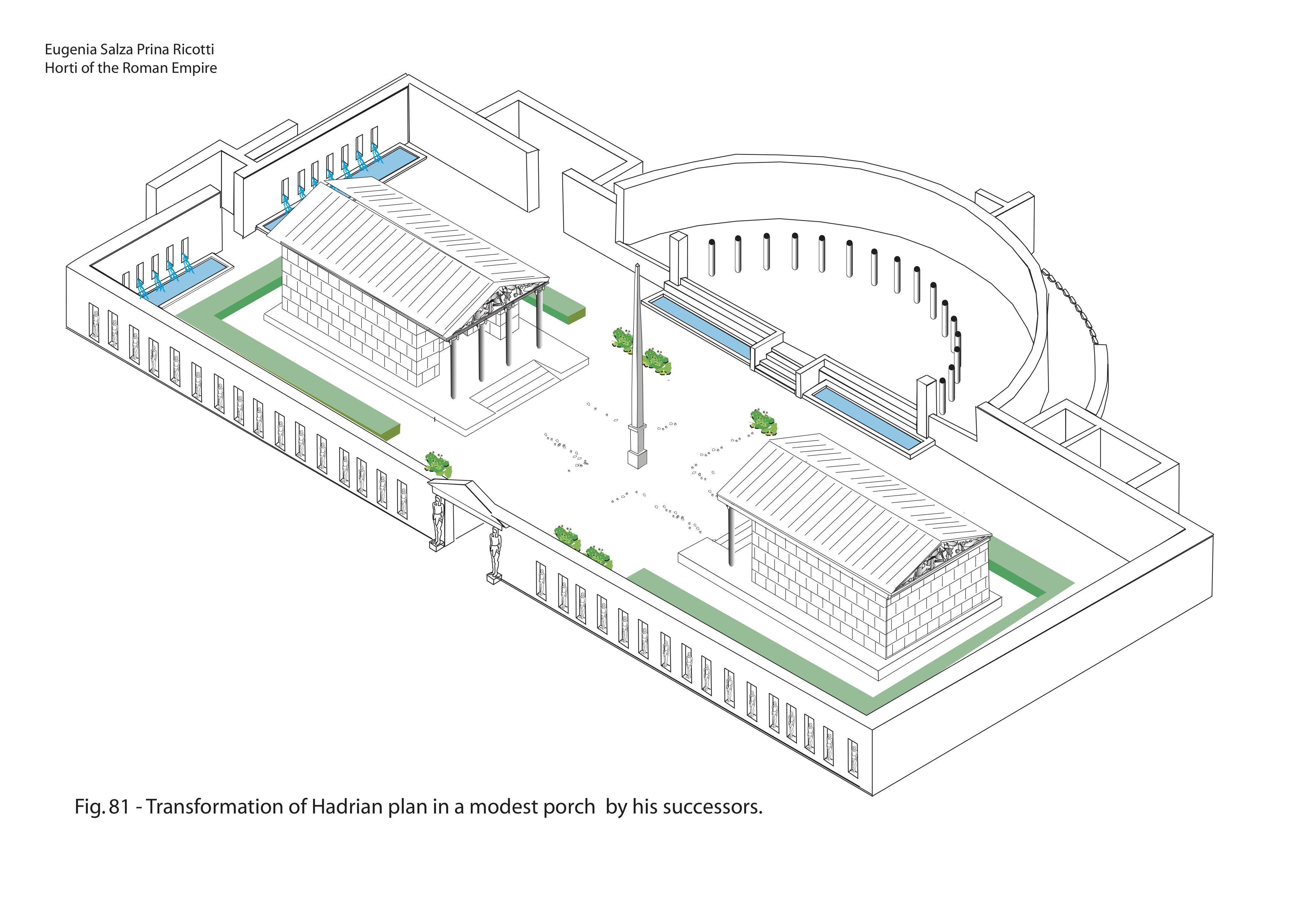
Of course all Hadrian's successors had no intention to complete Hadrian's plan and, just to give the garden a finishing touch, they substituted the colossal temple-tomb by a modest porch where Hadrian would not even bury a dog (Figg. 80 and 81).
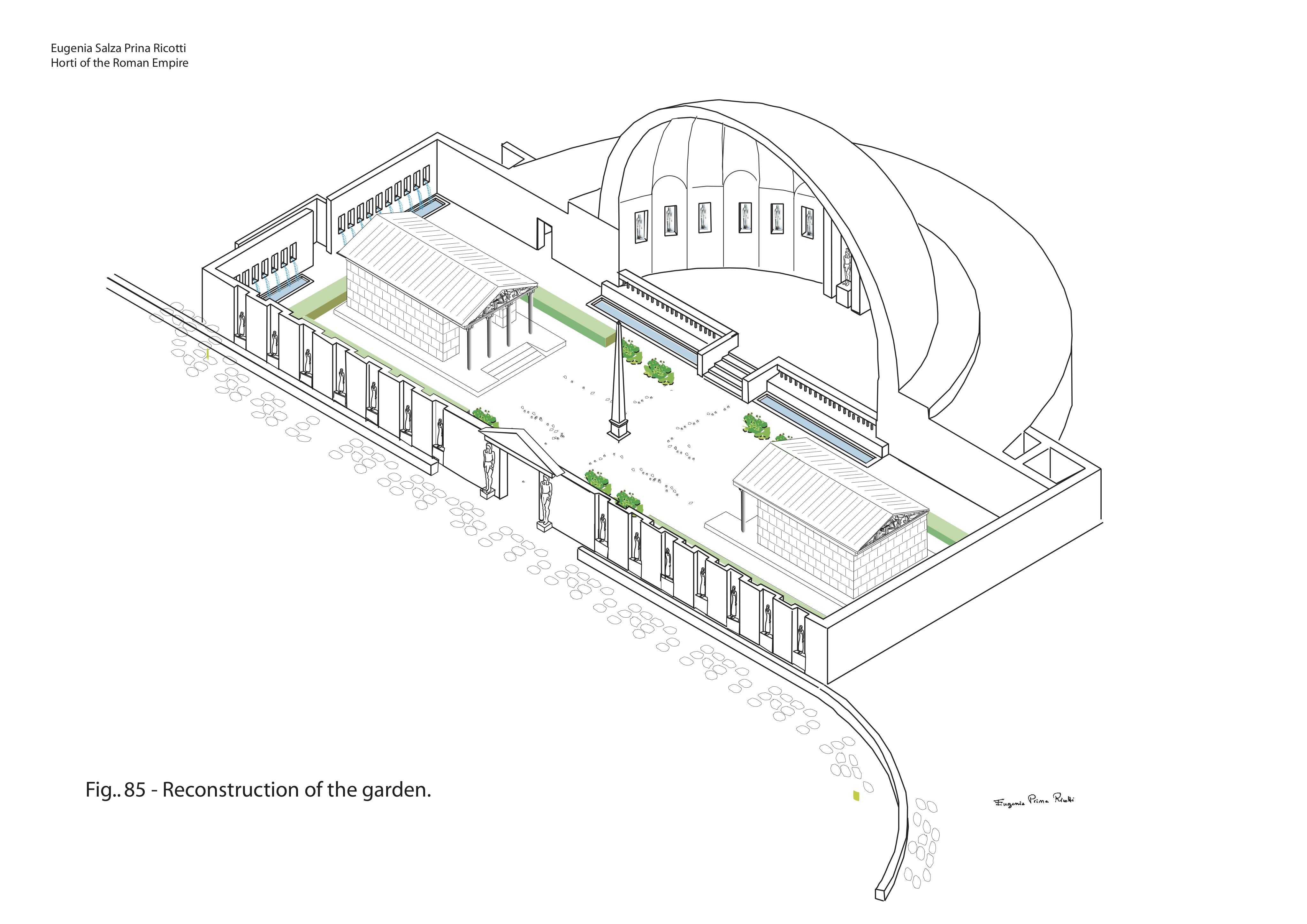
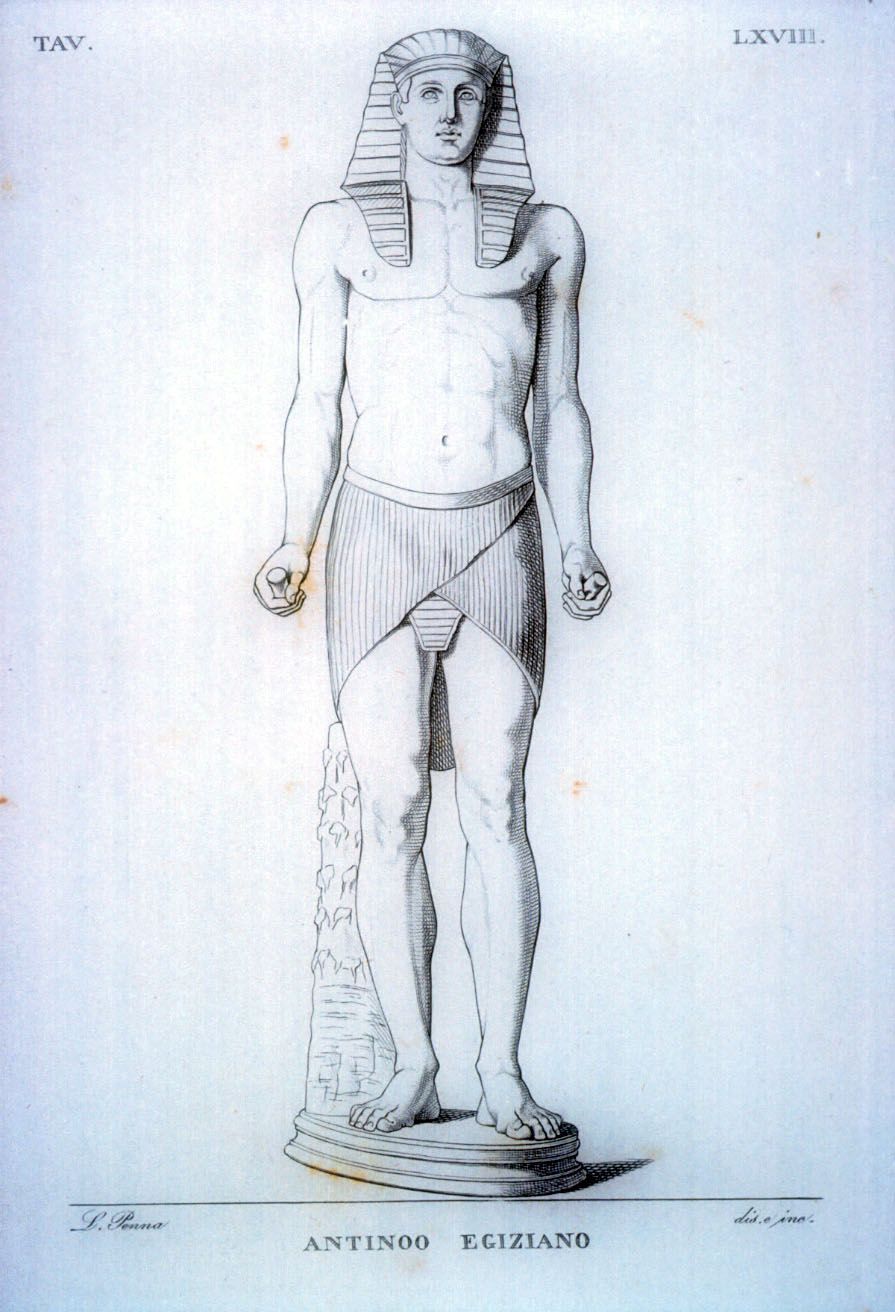
However the garden had been completed and we could reconstruct it basing ourselves on the trenches for the boxtrees edges and the flowering bushes that had been cut in the tufa (Fig. 82). Then, going on, studying its interesting facade wall with niches for statues on both sides, the east ones turned to the entrance road and the west ones looking at the garden (Fig. 83): 20 niches in which probably the 20 Egyptian statue found in the CVII and CVIII centuries excavations were displayed (C. FEA, 1790). Probably here at the two sides of the entrance door stood the two Telamons (H. WINNEFELD, 1895; E. Q. VISCONTI, 1782; II, 18; PENNA III, 29) similar to the representation of Antinous as an Egyptian god (WINNEFELD, 1895) (Fig. 84) the one that with a Harpocrates, had been found in a nearby store room. No document exists for the two Telamons now set at the two sides of the entrance of the "Sala rotonda" in the Vatican Museums, but it is pretty certain that these two statues which in 1500 were set at the two sides of the door of Tivoli's archbishopric see have been excavated in the Antinous' tomb area.
In the garden people could admire low white marble basins in which pure water fell by the over standing niches, the two Egyptian marble temple ad all sort of adornments. At the end it was also completed by an obelisk on which, in hieroglyphs, was inscribed the following declaration:
The god we find (Antinous represented in the destroyed higher part of the obelisk) rests in this place that is hidden in the property of "the Lord of prosperity" (princeps) of Rome (then Hadrian in his Villa Adriana).
Basing myself on all this information I drew a garden looking probably like the old one (Fig. 85).
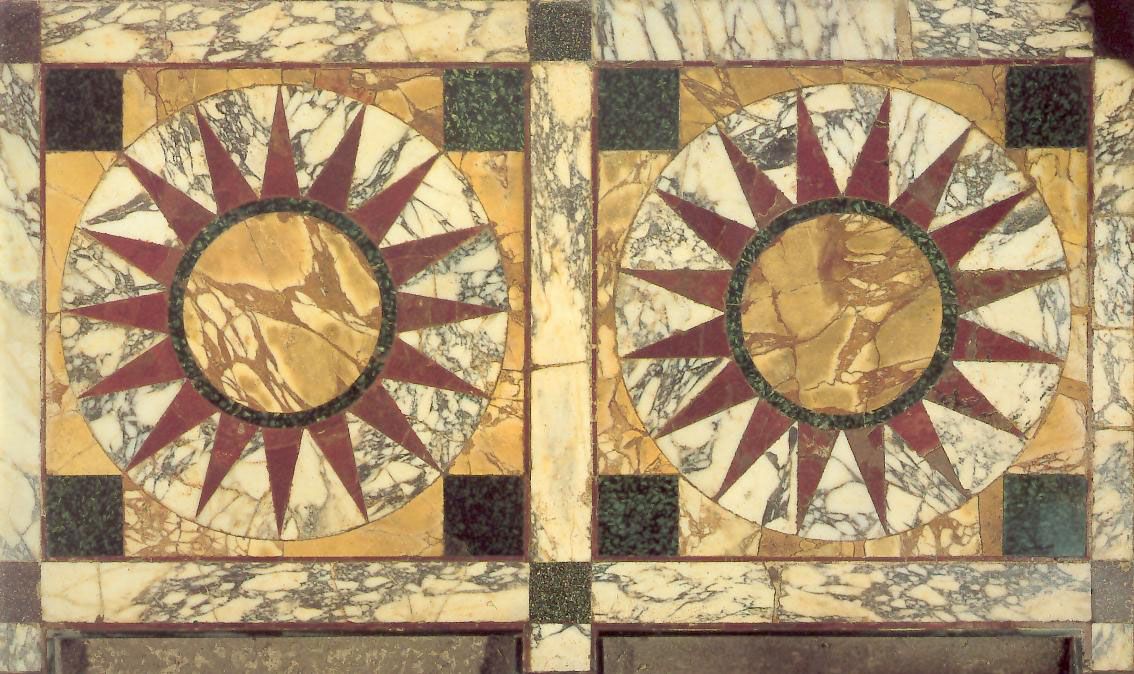
Obviously then, with the fall of the Roman empire and the Barbarian invasions, this place stood exposed to all the pillages that ruined the Roman's monuments. Heliogabalus began taking the obelisk and bringing it to Rome to be placed in his new circus. Then there were the pillages of the Middle Age. For centuries the local people considered Villa Adriana as an enormous quarry where they went to refurnish their churches of columns and their floors with luxurious slabs of marbles (Fig. 86). They also took bricks for their buildings and burned in their kilns fragments of statues or architectonic moldings to make lime (Fig. 87). They thought it was a very nice thing to do, because, starting from the VIII cent. A.D., the Church requested all believers to destroy the "pagan" works of art and they did it with enthusiasm: Besides completing this "worthy action", it helped them to obtain the best lime possible for their mortar.
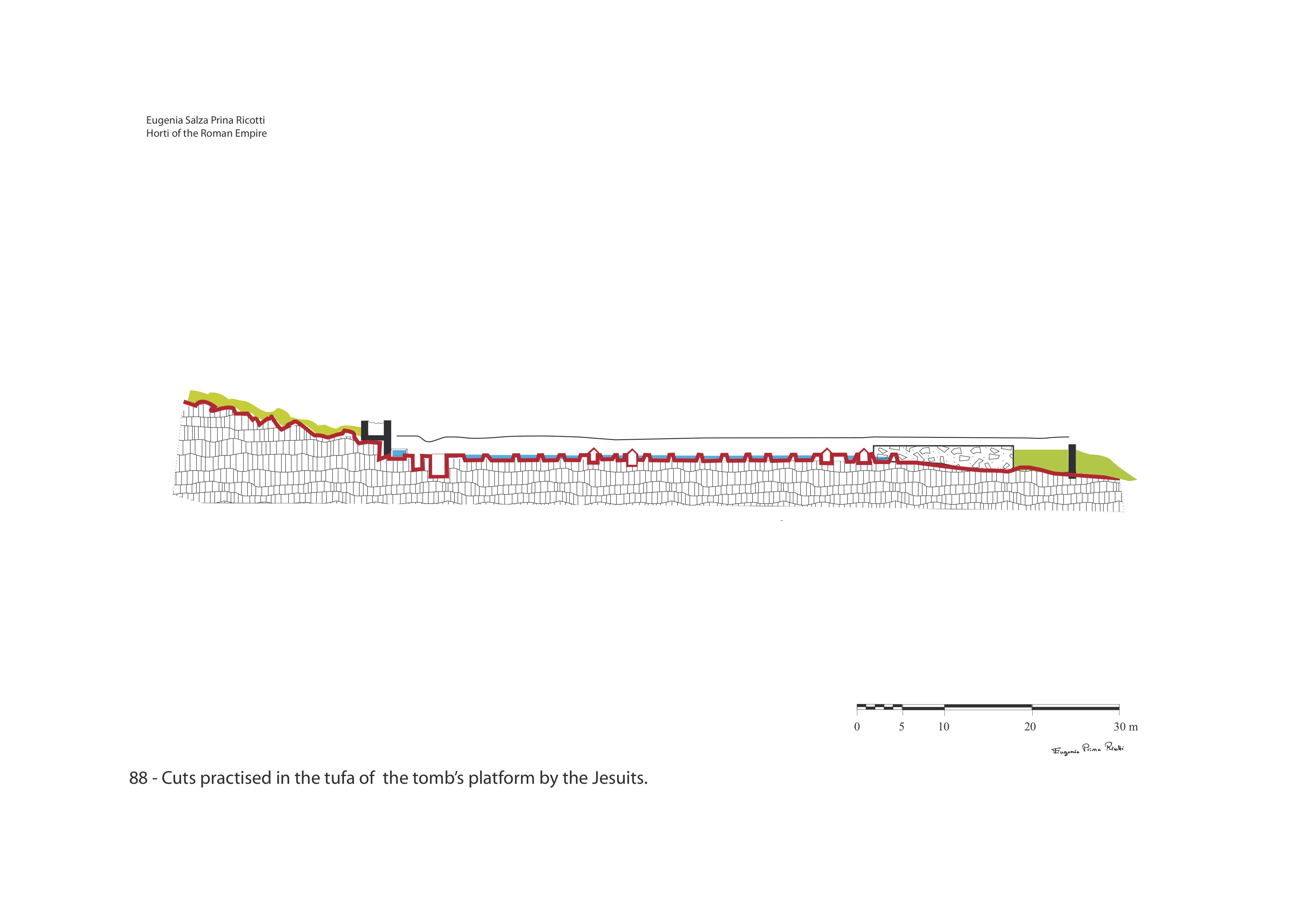
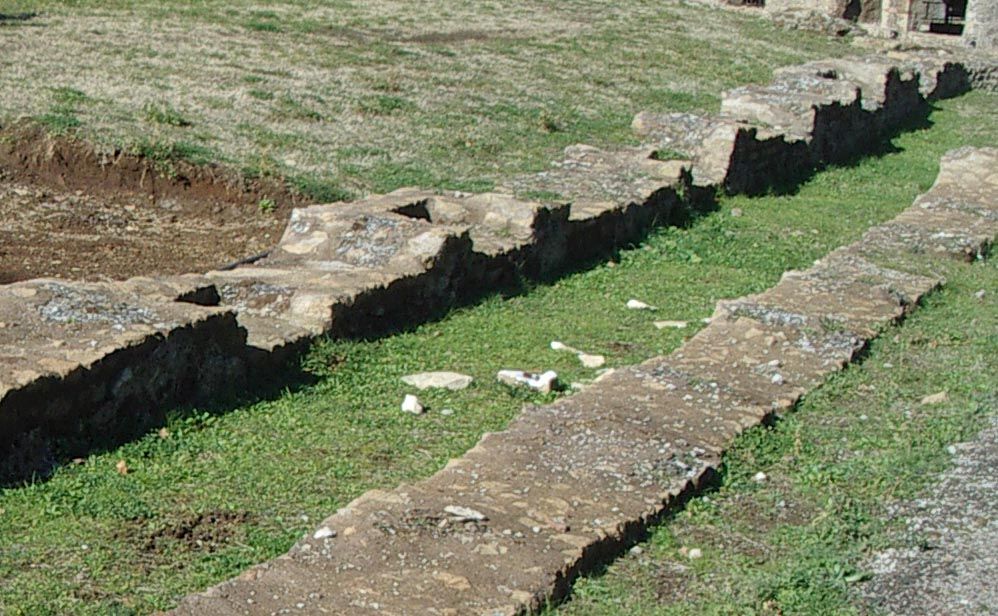
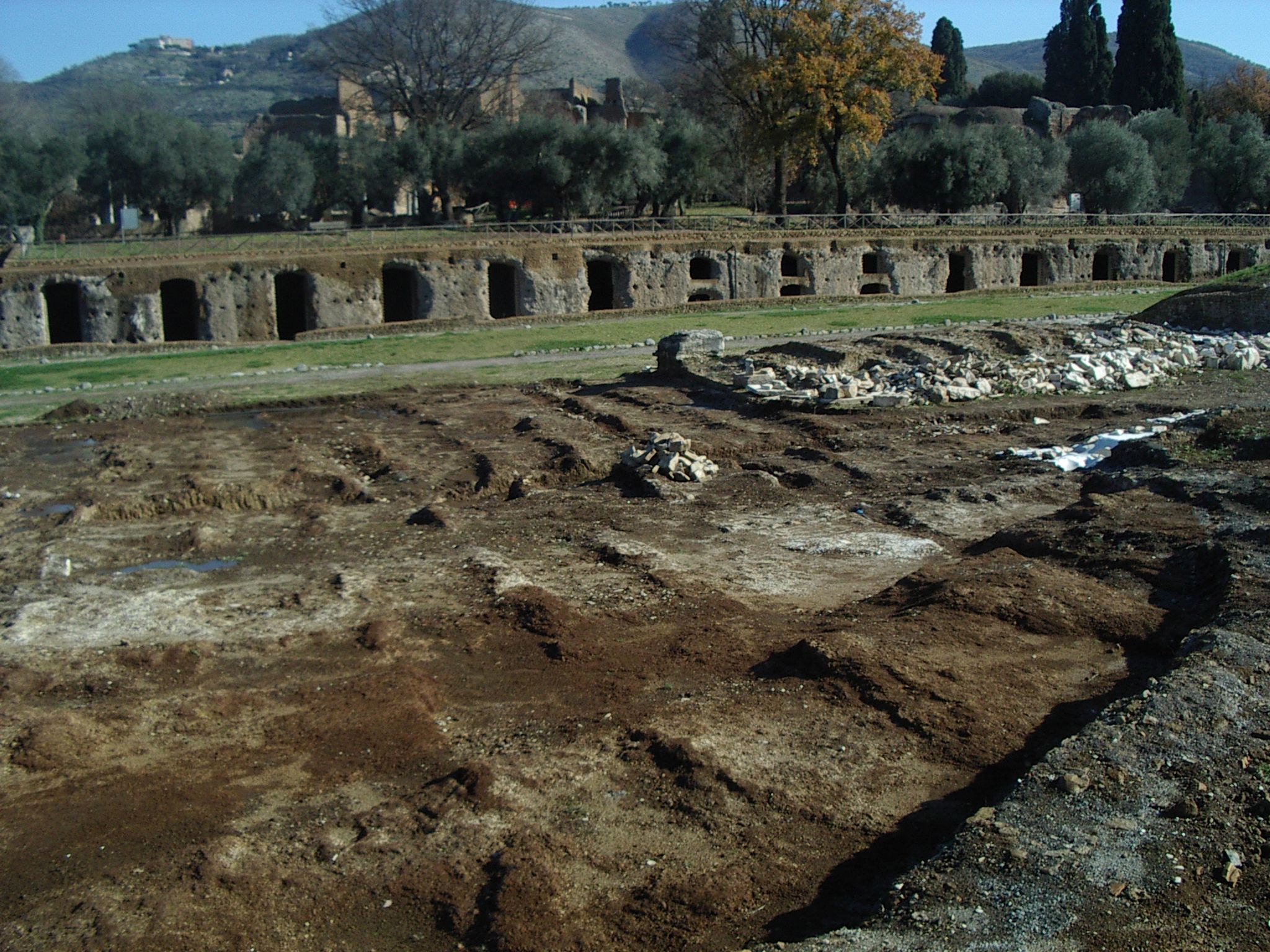
After the passage or this horde of locusts the only things that were left to Villa Adriana were its naked walls and not even all of them, because in 1650, when the Jesuits decided to make there a thriving vineyard, they completely cleaned the area and demolished all the walls that were still standing in Antinous' garden. The only things that were left untouched were the bases of the two temples. To destroy those large masses of conglomerate would have taken lot of work. Thus they were left there where they stood, and, cutting low trenches in them, were treated exactly as if the they were part of the tufa's platform (Figg. 88 and 89).
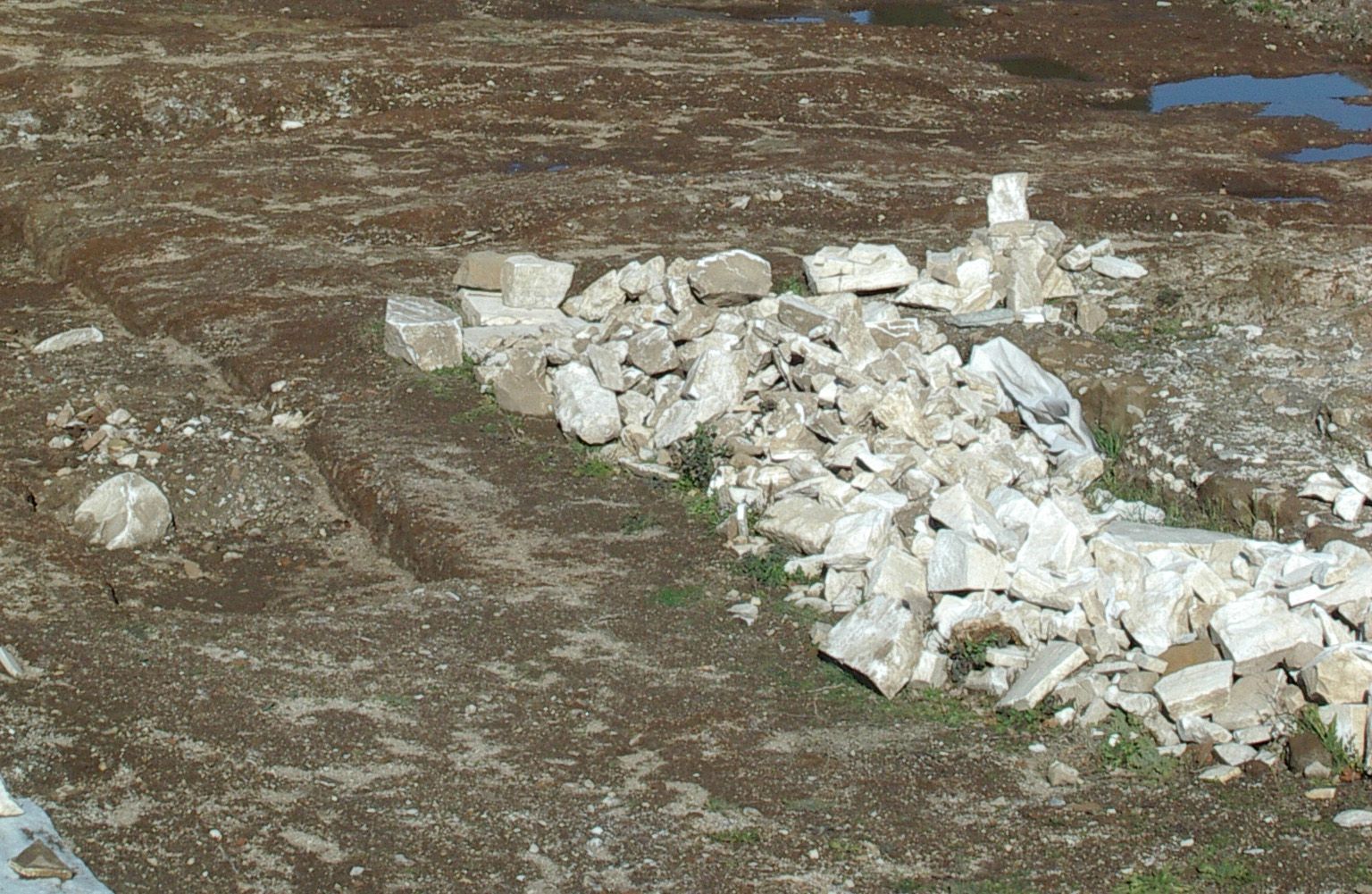
Today on this rocky plain, left naked by an exaggerate excavation, we can see all that happened here, from the big mass of marble fragments prepared for the kilns (and that was left there by the local people who, now had more than enough lime, and never burned them) to the long furrow traced in the tufa platform by the holy Fathers in such a way as to held rain water in them, keep always humid the soil and by capillarity irrigate the young vines.
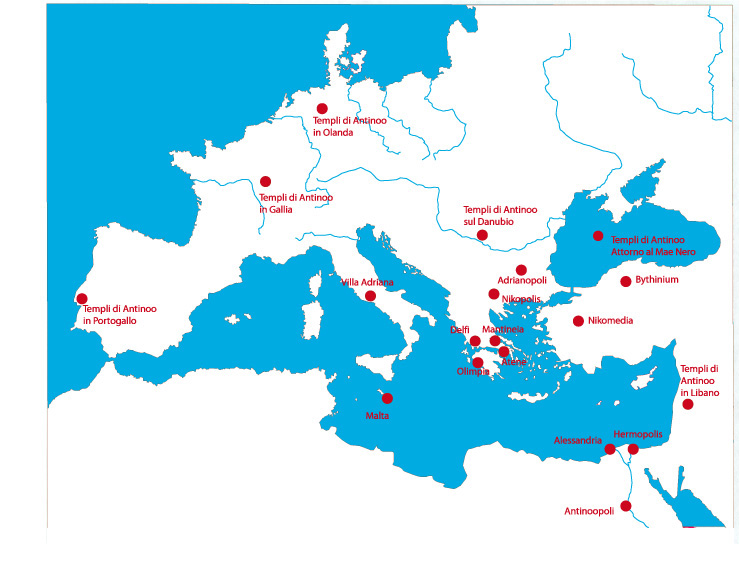
As we have said at the beginning the Temple-tomb was never completed. Antinous who, at the end of the works, would have been transported there, was left in Antinoopolis' temple (J. C. GRENIER 1986). Anyway he now was a god with a well asserted religion, and temples (Fig. 90) in a great part of the known world. A cult that thrived up to the middle of the IV century (ATTANASIUS 350 A.D.). However also if Antinous was left in the desert's sands his memory is still here and visiting Villa Adriana, one can always feel his presence.
Plans
Images
Dates
Built between 118 and 138 CE
Excavation Date
unspecified
Bibliography
- H. Winnefeld, Die Villa des Hadrian bei Tivoli, Berlin 1895, p. 154. (worldcat)
- H. Kähler, Hadrian und sein Villa bei Tivoli, Berlin 1950. (worldcat)
- S. Aurigemma, Villa Adriana, Roma 1961. (worldcat)
- F. Rakob, "Der Bauplan einer kaiserlichen Villa," in W. Hartmann (ed.), Festschrift K. Langheit, Bönn 1973, pp. 113-125. (worldcat)
- F. E. Brown, "Hadrianic Architecture," in L. F. Sadler (ed.), Essays in Memory of Karl Lehmann, New York 1964, pp. 55-58. (worldcat)
- G. Lugli, "Studi topografici intorno alle antiche ville suburbane. VI. Villa Adriana. A. - Una villa di età repubblicana inclusa nelle contruzioni imperiali," Bullettino della Commissione archeologica Comunale di Roma 55, 1927, pp. 139-204. (worldcat)
- C. Caprino, "Plastico marmoreo di uno stadio nella Villa Adriana a Tivoli," Rivista dell'Instuto nazionale di archeologia e storia dell'arte 3 s., 19-20 (1996-97), pp. 113-151. (worldcat)
- E. Salza Prina Ricotti, "Nascita e sviluppo di Villa Adriana," Atti della Pontificia Accademia romana di archeologia: Rendiconti 65, 1992-93, p. 73. (worldcat)
- E. Salza Prina Ricotti, Villa Adriana: il sogno di un imperatore, Roma 2000, pp. 144-147. (worldcat)
- J. E. Foss, J. T. Ammons, M. E. Simmons, S. Y. Lee, R. C. Minter, "Genesis of soil developed in volcanic tufa at Hadrian's Villa near Rome," Agronomy Abstracts ASA, Madison WL 1990, p. 291. (worldcat)
- J. E. Foss, "Appendice. Soils of Hadrian's Villa," in E. Salza Prina Ricotti, "Il sistema di irrigazione della Piazza d'Oro," Atti della Pontificia Accademia romana di archeologia: Rendiconti 62 (1989-90), pp. 151-157. (worldcat)
- J. E. Foss, "Appendice. Soils of Hadrian's Villa," in W. F. Jashemski, E. Salza Prina Ricotti "Preliminary Excavations in the Gardens of Hadrian's Villa: the Canopus Area and the Piazza d'Oro" American Journal of Archaeology, Vol. 96, No.4 (Oct. 1992), pp. 595-597. (worldcat) (jstor)
- M. E. Timpson, J.E. Foss, R. J. Lewis, C. A. Stiles, "Soil interpretation of some Roman archaeological sites in Italy and Tunisia," 15th Int. Congr. of Soil Science, Vol. 6b, 1994, pp. 172-173. (worldcat)
- J. E. Foss, E. Salza Prina Ricotti, "Lead Pipes Use in Ancient Roman Irrigation System and Content of Pb in the Soil of Archaeological Sites," Bulletin of the Metals Museum, Vol. 26 (1996-II), Aoba, Aramaki, Aoba-ku, Sendai, Japan, pp. 33-47. (worldcat)
- E. Salza Prina Ricotti, "La ricerca della tomba di Antinoo a villa Adriana," in Atti della Pontificia Accademia romana di archeologia: Rendiconti, Vol. 75 (2002-2003), pp. 113-144, figg. 1-19. (worldcat)
- Vitruvius, De Architectura, trans. W. Jones I; I; 4.
- C. Fea, "Memorie di varie escavazioni fatte in Roma, e nei luoghi suburbani vivente Pietro Santi Bartolo" in Miscellanea filologica critica e antiquaria dellìavvocato Carlo Fea I. Roma 1790, p. CCLXII, n. 139. (worldcat)
- E. Q. Visconti, Museo Pio Clementino II, 1782, p. 140. (worldcat)
- A. Penna, Viaggio pittorico nella Villa Adriana, Roma 1831, III, 29. (worldcat)
- J. C. Grenier "L'emplacement de la tombe de Antinous d'après les textes de l'obelisque Barberini," in J.C. Grenier, F. Coarelli, "La tombe de Antinous à Rome," in Mélanges de l'École française de Rome, Antiquité XCVIII (1986), pp. 217-229. (worldcat)
- Attanasius 350 A.D. – From a letter of Saint Attanasius "And then this is the new god, Antinous, Hadrian's servant, a boy who was a slave of the emperor's depraved and against nature lust... This scandalous and shameless boy died in Aegypt during an imperial court's visit to this country. Immediately His Imperial Majesty issued an order and an extremely rigorous edict obliging all his subjects to recognize the deity of the dead boy..."