Villa Sao Cucufate
Province
Province Description
Despite the prior existence of urban centers like Metellinum, the capital of Lusitania was a new foundation, the Colonia Augusta Emerita (Mérida), which would also serve as the capital of one of the smaller juridical units (conventus) and would be the scene of flourishing activity in the succeeding centuries, its prosperity lasting until the late Roman and Visigothic era. Subsequently, a series of well-known Roman cities were built in what was then Lusitania but is now partly in Portugal and partly in Spain. As well as the capital, there were Conimbriga, Salmantica, Evora, Olisipo (now Lisbon), Pax Iulia (now Beja), and Metallium Viscascense (Aljustrel), this last recognized as the capital of an important mining area. The series of wealthy villae, such as that of La Cocosa, Milreu or San Cucufate are particularly noteworthy. Another of the important elements of the Roman era is the series of still visible ways of communication, of which the Vía de la Plata has most remaining, especially in the sections of Baños de Montemayor in Cáceres or the bridges that cross the rivers, such as that of San Pedro de Alcántara, or of Mérida.
Location
Garden
Villa Sao Cucufate
Keywords
Garden Description
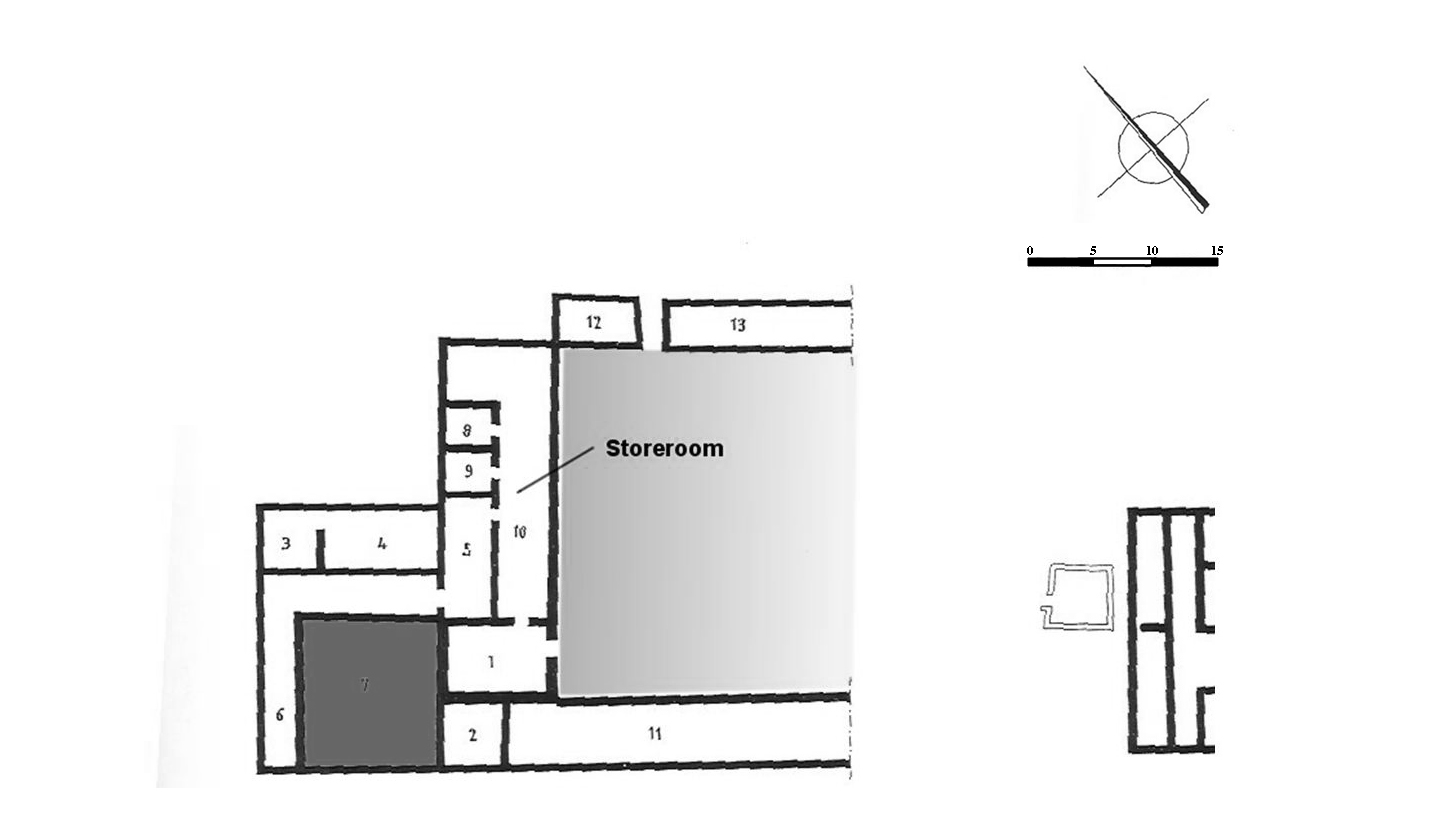
This villa, which lies southeast of Lisbon, had multiple construction phases, investigated by J. Alarcão, R. Etienne, and F. Mayet. The key to distinguishing the first villa from the second turned out to be that the first was made of granite without mortar, while the second was built of schist. It was a modest structure with a patio [Fig. 1, 7], quite possibly an informal garden, surrounded on two sides by galleries [6]. Rooms [3], [4], and [5] were the family's living quarters. Half-buried jars made clear that room [10] was a storeroom, presumably for grain, oil, and wine. Dating this phase is uncertain; some terra sigillata suggests a date in the mid 1st century.
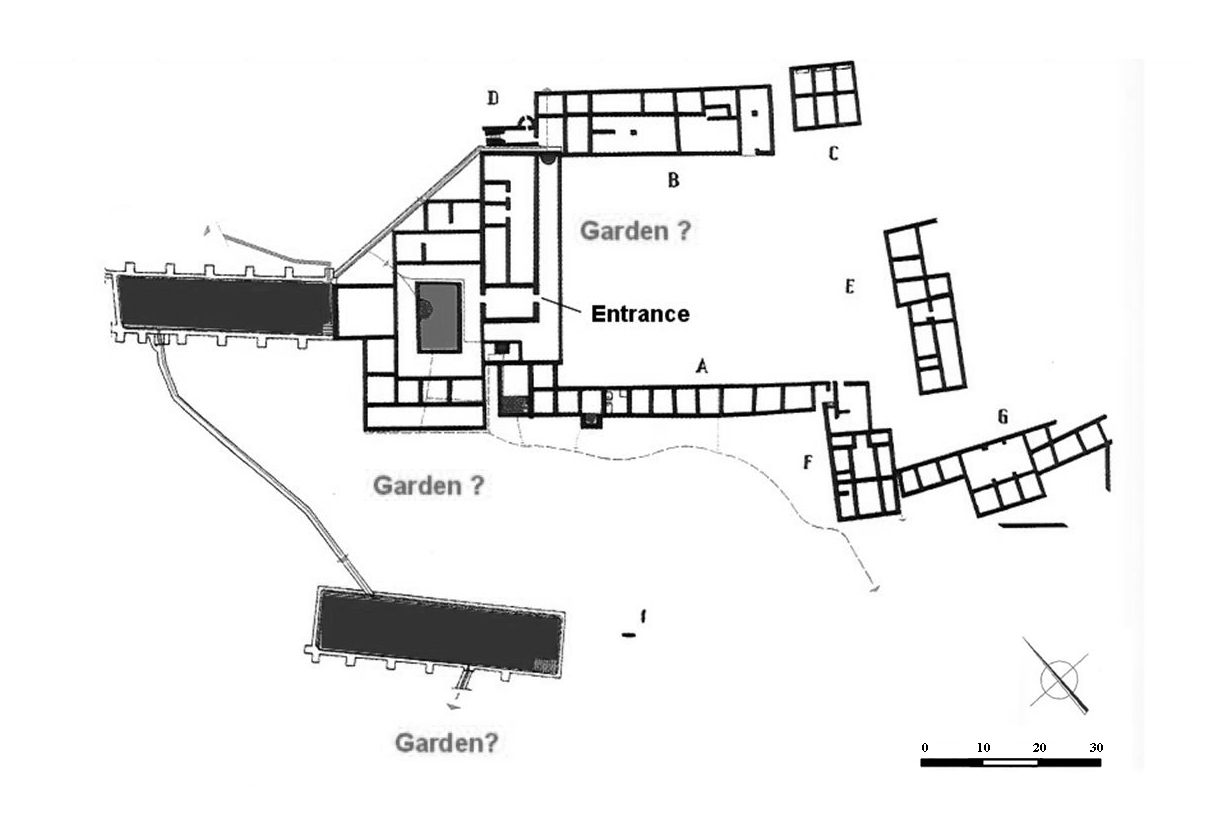
About 130 AD, the family demolished much of its home and built in its place a much more spacious abode, which preserved the orientation and the width of the farmyard from the first phase. To the northwest, the old patio and its galleries gave way to a whole new structure: a peristyle with galleries on all four sides surrounded a central garden with a semicircular pool. The pool was a bit off-center, and the garden was aligned with the new principal room of the house, perhaps a tablinum, on the northwest side of the peristyle. Behind this room, further to the northwest, was a huge water tank holding some 800 cubic meters. The source of the water has not been identified. This tank supplied water to the pool, baths, and several smaller pools and fountains. Overflow from this tank was collected in a similar tank of half the capacity farther down the hill to the south. It could have served as a swimming pool in the summer and to irrigate gardens and orchards farther down the slope. The rooms on the southwest side of the peristyle opened onto a broad veranda with a good view. The rooms just to the east of the veranda were baths; their waste water would have irrigated the gardens. With this source of abundant water, it seems safe to guess that the very visible area just below the veranda was gardened. A small fountain with semicircular pool graced the northeastern end of the gallery behind the colonnade.
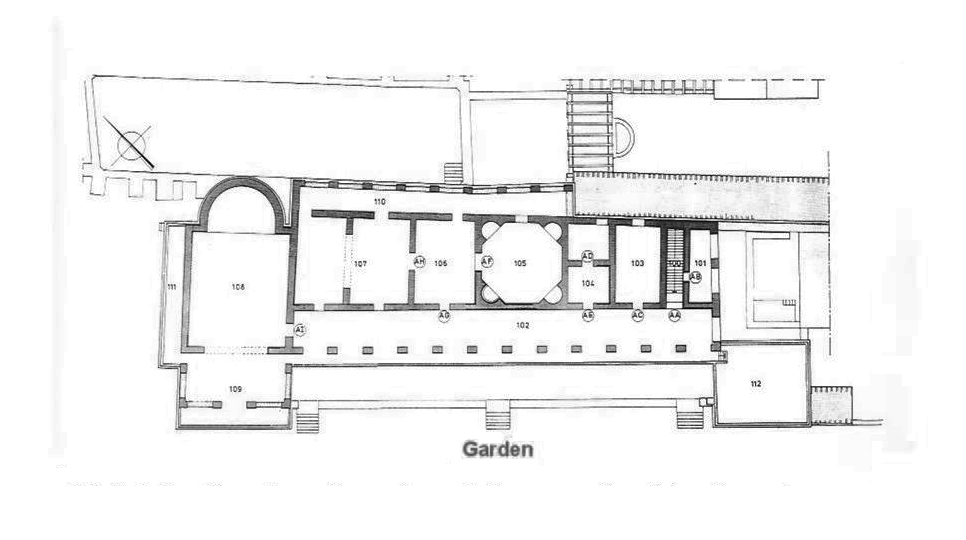
In about 360 AD much of the old villa was demolished and a new, two-story structure erected. The lower floor rose some seven meters high with barrel vaults so well built that many are still standing. The grand house of the owner was on the upper floor. The key to seeing the relation of this third phase to the second phase is the large water tank, which was preserved. Comparison of Figures 2 and 3 shows that the semicircular pool of the second phase peristyle survived, and that the galleries along the southwestern and northeastern sides of the peristyle were considerably extended. In fact, a guest entering from the main façade and bound for the elegant upper story would have to pass along the southeastern gallery to get to the stairs. That fact, coupled with the preservation of the pool, strongly suggests the former peristyle garden was maintained and extended along with the gallery.
The upper floor did not have a garden but offered splendid views of gardens, both in front and behind the house. Between the two end towers stretched, on the southwest (front) side, a roofed veranda over 40 meters long with a sturdy wooden rail. This emphasis on the vista leaves little doubt that the well-watered area in foreground, through which the guests arrived, would have been beautifully developed as a garden.
Plans
Images
Bibliography
- J. G. Gorges, pp. 124 and 477; J. de Alarcão, S. Cucufate. Roteiros da Arqueologia Portuguesa 5. Instituto Portugues do Patrimonio Arquitectónico, 1988. (worldcat)